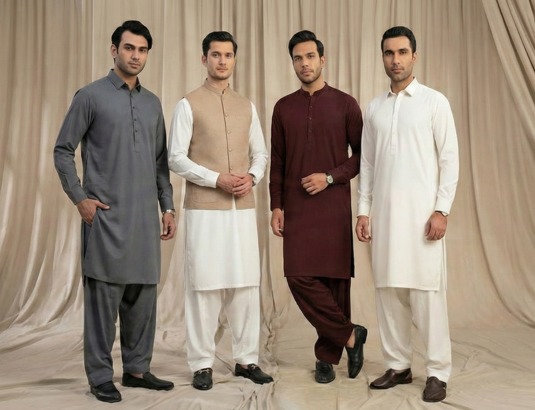
How Men in Pakistan Are Dressing for Aftari During Ramzan
Remember how your father would change before Maghrib? No matter how long his day had been, he wouldn’t sit at the dastarkhwan in his work clothes. That wasn’t vanity. It was an intention. Ramzan has a way of turning ordinary evenings into occasions, and iftari is one of them.
Dressing well counts in showing up right. This month, as families gather and cameras inevitably come out, Pakistani men are leaning back into their eastern wear roots. Let’s talk about how they’re doing it right.
Why Iftari Dressing Still Matters
Aftari happens every day in Ramzan, but it’s never just another meal.
It’s the moment the family gathers. The pause before the first sip of water. The quiet dua. The conversations that stretch long after maghrib. These evenings become memories.
Changing before Iftari signals something simple: I’m present.
Eastern dresses for men naturally carry that tone. A clean shalwar kameez or kurta shalwar doesn’t feel forced. It feels culturally and spiritually aligned. This isn’t about overdressing. It’s about showing up with respect for the month and the moment.
The Foundation: Shalwar Kameez & Kurta Pajama
At the center of Ramzan dressing is one thing: fit and fabric.
Pakistani men’s shalwar kameez remains unmatched for Iftari. But the way it’s being worn has evolved. The oversized, shapeless look is fading. So is the experimental, overly tight cut. The tailored, breathable, and clean middle ground is winning.
What’s working this Ramzan:
- Balanced tailoring (shoulders should be structured, keep the body relaxed)
- Lightweight cottons for late Feb/March evenings
- Wash & wear fabrics for practical rotation
- Subtle detailing instead of heavy embellishment
For more intimate home settings, the kurta pajama for men is gaining preference. It feels lighter, slightly more modern, and easy to move in, especially after a long fasting day. Band collars and minimal embroidery are trending quietly.
The goal isn’t flash. It’s refinement.
The Waistcoat Revival
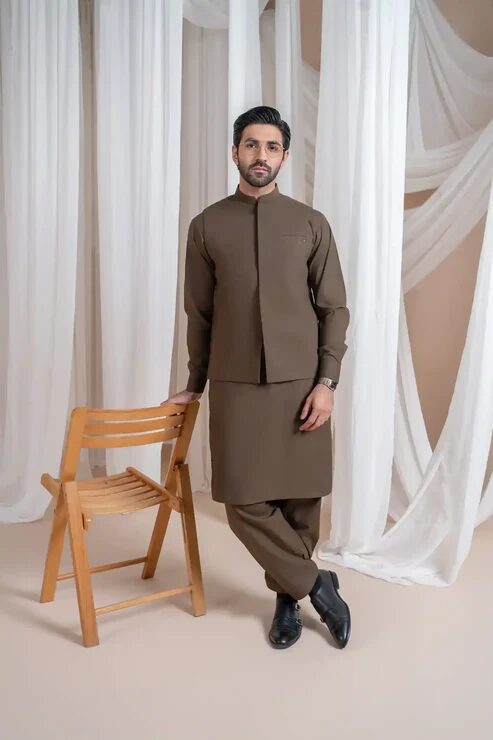
If one piece is quietly transforming Ramzan wardrobes this year, it’s the waistcoat for men in Pakistan.
The beauty of a waistcoat is in its versatility.
The same kurta can shift tone instantly:
- Without waistcoat → relaxed home Iftari
- Matching waistcoat → extended family gathering
- Contrasting waistcoat → hosted or restaurant event
That’s not extra clothing. That’s smart layering.
Plain, solid waistcoats are leading because they pair easily. Nehru-collar structured cuts feel modern without losing tradition. Light embroidery can work during Ramadan, but it truly shines on Eid.
The only rule? Fit is everything. Shoulders clean. Length proportionate. Buttons aligned. A well-fitted waistcoat elevates. A poor one distracts.
The Ramzan Color Direction
Color choices this year feel calmer and more intentional.
White remains timeless, especially for Jumma or mosque iftar, but men are expanding their palette.
Leading tones this Ramzan:
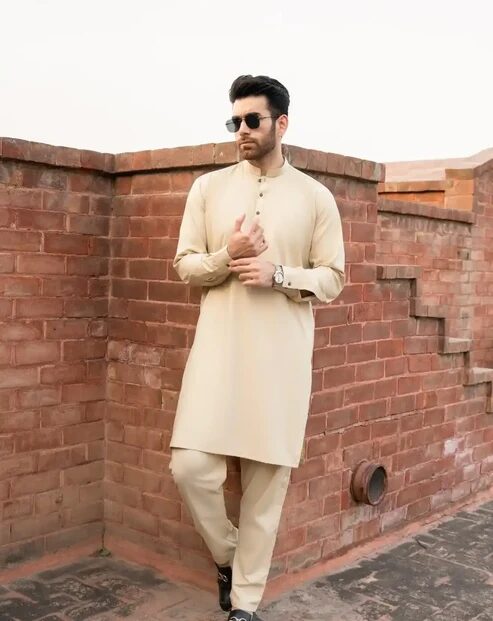
- Cream and off-white (more forgiving, equally elegant)
- Olive and sage greens (traditional resonance with freshness)
- Powder blue and muted pastels (seasonally aligned)
- Grey and navy (urban, structured, reliable)
Earth tones like beige and camel are also gaining traction because they layer beautifully with waistcoats.
What’s quietly fading? Neon shades and overly loud colors. Ramzan dressing feels strongest when the palette is composed.
Color doesn’t need to dominate. It just needs to complement the moment.
Reading the Occasion
Not every Iftari requires the same level of effort. The smartest dressers read the room.
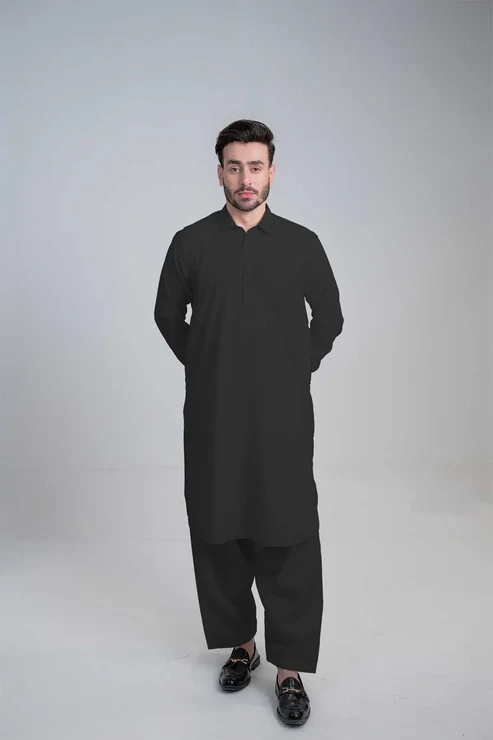
At home with immediate family, a clean kurta pajama or simple shalwar kameez is enough. Freshly changed. Pressed. Comfortable.
For extended family gatherings, add structure with perhaps a waistcoat, a more refined fabric, or a slightly elevated color choice.
For restaurant or professional Iftaris, premium readymade suits for men with coordinated waistcoats create presence without appearing excessive. Neutral tones and clean lines work best here.
At the mosque, simplicity wins. Light colors. Minimal styling. Clean footwear that’s easy for wudu.
The common thread across every setting? Freshly pressed and intentional.
The Modern Shift: Readymade & Online
There’s been a noticeable shift in how men are shopping for Ramzan.
Custom tailoring still has its place, but readymade suits for men have evolved significantly. Better cuts. More consistent sizing. Improved fabric finishing. Modern silhouettes that don’t require multiple fittings.
More men are also choosing to buy shalwar kameez online rather than navigating crowded markets mid-Ramzan. Comparing men’s shalwar kameez brands in Pakistan through curated platforms makes it easier to evaluate color, fit, and pricing without rushing decisions.
The advantage is convenience and clarity. You shop earlier. You choose calmly. You rotate smarter.
Dressing Through the Month
Smart Ramzan wardrobes follow a rhythm.
The first week sets the tone with simple, grounded pieces.
Mid-month is where waistcoat rotations create variation from the same base outfits.
The last ten nights often bring lighter tones, cleaner silhouettes, and slightly more elevated fabrics.
And as Eid approaches, Ramzan outfits naturally transition toward celebration without overshadowing it.
Conclusion
Iftari dressing isn’t about impressing anyone. It’s about intention. The simple act of changing before maghrib signals presence to your family, to the moment, and to yourself. This Ramzan, Pakistani men are choosing better fits, smarter color palettes, and thoughtful layers. A clean shalwar kameez, a well-structured waistcoat, the right tone sometimes that’s all it takes to show up right.

Post Comment