How Objective Pupillary Evaluation Improves Neurocritical Decision-Making
Every second is important in the neurological department. Patients who come with severe brain issues, damage, stroke problems or are not in a condition to communicate their symptoms. One of the most traditional ways of finding out brain damage is through pupil examination. Today, pupillary evaluation is transforming how doctors make more critical decisions with much more accuracy.
This blog will help you understand how objective pupillary assessment improves the accuracy and reduces human error.
Understanding Pupillary Evaluation in Neurocritical Care
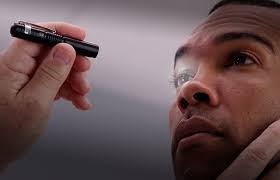
The pupils’ reaction to light is controlled by the brainstem and nervous system. Any disruption in these systems causes trauma or swelling. Traditionally, it was measured by using a penlight method. This method is quick but completely depends on the judgment and experience of the medical staff. Results and judgments may vary from one clinician to another.
Objective pupillary evaluation uses devices that provide very precise measurement of the pupil size and its reactivity to light.
What Makes Pupillary Evaluation “Objective”?
Objective pupillary evaluation completely depends on digital parameters. It measures the size of the pupil in millimetres, constriction and dilation speed. It’s reactivity to light and symmetry between both eyes.
Most of the devices generate NPi it compares the data of the patient with the normal value. Abnormal data shows neurological deterioration.
Improving Early Detection of Neurological Deterioration
One of the biggest advantages of pupil evaluation is early detection. Worsening of brain damage can occur rapidly without any kind of warning. Small changes in pupil reactivity are the early signs of brain injury or damage.
Doctors can see the graph over time and not rely on a single observation through objective measurement. It prevents any kind of irreversible damage.
Supporting Better Decision-Making in the ICU
Neurological care units manage patients who are usually unconscious or ventilated. In such cases, objective evaluation gives more accurate data. They can be shared among teams easily, as the measurements are numerical. It reduces the scope of miscommunication. This supports better decision-making by medical staff and better treatment.
Reducing Human Error and Variability
Objective valuation reduces the chance of human error. The results are standardised, regardless of who is performing the test. This consistency becomes very important in emergency departments and the ICU. If the data is reliable, it becomes easy for doctors to make decisions and avoid any unnecessary delay.
Enhancing Monitoring of Intracranial Pressure
Increased ICP can be life-threatening. It is commonly seen in patients with brain injury. Objective evaluation allows a medical team with continuous monitoring alongside other ICP indicators. When the results worsen, Doctors quickly prepare for surgical procedures.
Guiding Prognosis and Outcome Prediction
Studies show that any kind of abnormalpupil diameter measurement is directly associated with poor neurological health, especially when the NPi is persistently low.
This information is very critical and helps doctors make informed decisions. It helps families to understand the ongoing care. While pupillary evaluation should not determine results alone, it gives important objectives for any kind of judgment.
Limitations and Responsible Use
Despite having a lot of benefits, pupillary evaluation should not replace neurological assessment. There can be eye-conditions or certain medical issues that may influence the results. Using this device can be expensive. When used accurately, objective evaluation enhances the results, not replacing any kind of medical expertise.
Conclusion
Objective pupillary evaluation has become one of the most powerful tools in neurological medical care. Providing accurate data improves early detection and leads to better decision-making. In situations where a reliable and quick neurological assessment can make a difference in a patient’s life, objective pupillary evaluation offers clarity and confidence to doctors.




Post Comment