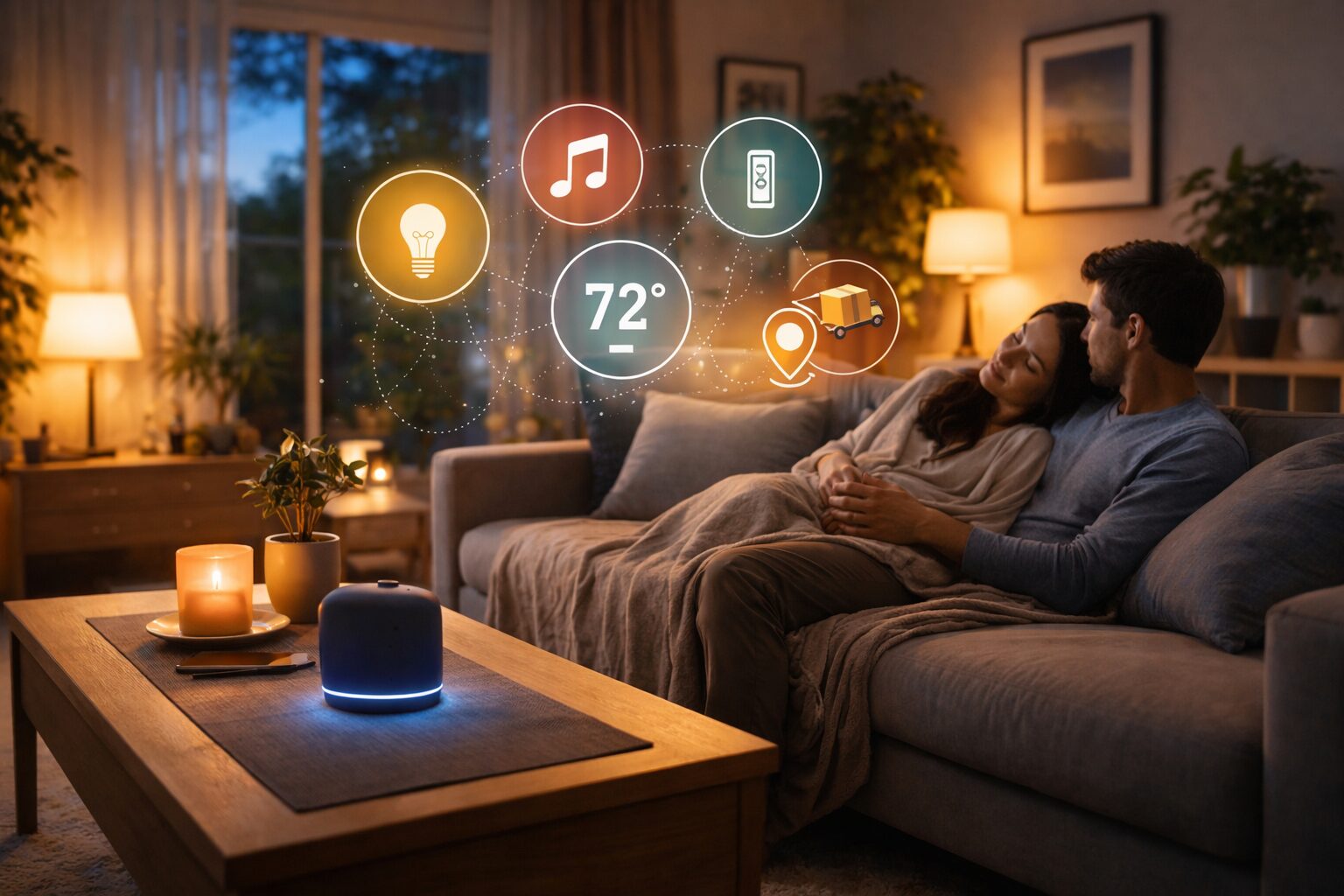
How Technology Is Quietly Turning Our Homes Into Spaces for True Relaxation
Most of us don’t immediately notice the moment when home stops being just a place we return to and starts becoming something that actually supports how we feel. It happens gradually, through small changes that begin to add up. We come back after a long day, and instead of adjusting everything ourselves—lights, temperature, noise—we start to feel like the space is already meeting us halfway. Technology plays a surprisingly quiet role in this shift, not by adding more things to manage, but by removing the need to constantly think about them, which is exactly what makes a space feel more relaxing rather than more complicated.
We Feel the Difference Through Light, Sound, and Mood
One of the first things many of us notice is how the atmosphere begins to change without effort, especially through lighting and sound that adapt to daily rhythms instead of staying fixed. Systems like Philips Hue allow us to move from bright, energizing light during the day to softer, warmer tones in the evening, and we don’t need to constantly adjust anything manually because it becomes part of a routine. At the same time, devices such as Amazon Echo or Google Nest Audio help create a background that feels calming rather than distracting, whether it’s quiet music, ambient sounds, or even guided relaxation that blends into the space.
What makes this feel different for many people is that these elements begin to work together instead of separately, so light fades as sound softens, and the entire environment shifts in a way that feels natural rather than controlled. Instead of trying to “create” a relaxing moment, we simply step into it, which is often what makes it actually work.
Comfort That Adjusts Before We Even Think About It
Another thing many of us start to appreciate over time is how physical comfort becomes less something we manage and more something that just feels right on its own. Devices like the Google Nest Thermostat learn patterns and begin adjusting temperature based on when we wake up, when we leave, and when we come back, so instead of constantly changing settings, we just notice that the space feels comfortable at the right moments. It’s not a dramatic change, but it removes those small interruptions that quietly break relaxation.
The same goes for air quality and overall environment, which many people only realize matters after experiencing the difference. Cleaner air, stable temperature, and consistent conditions don’t demand attention, but they make it easier to rest, focus, or simply feel better at home. These details often go unnoticed individually, yet together they create a space that supports us in a way that feels almost effortless.
The Small Things That Quietly Stress Us
Relaxation at home is not only about comfort, but also about removing small, persistent sources of stress that tend to linger in the background, even when we don’t consciously focus on them. Many of us have experienced that subtle tension of waiting for a delivery, checking updates multiple times, or wondering if something has been delayed, and even though it seems minor, it keeps the mind slightly engaged instead of fully relaxed.
That’s why clarity in everyday tasks matters more than we often realize. Instead of jumping between different carrier websites or trying to piece together incomplete updates, many people now rely on tools that bring everything into one place. When we check a shipment using TrackingPackage delivery tracking, we can follow the entire journey clearly, even when it moves across different carriers, and that simple visibility removes uncertainty that would otherwise stay in the background. It’s a small shift, but it helps us let go of something we didn’t even realize was holding attention.
When Our Space Starts Responding to Us
What becomes especially noticeable over time is how our environment begins to reflect not just our routines, but how we actually feel. Many of us have days when energy is lower, stress is higher, or focus is harder to maintain, and instead of forcing ourselves to adjust, the space can start adapting to those states. Softer lighting after a poor night’s sleep, quieter surroundings after a long day, or a more comfortable temperature when we need to slow down—these changes don’t feel like features, they feel like support.
This creates a different kind of relationship with the space we live in, because instead of constantly shaping it ourselves, we begin to feel like it is responding to us, which makes relaxation easier to reach and maintain.
When Technology Stops Feeling Like Something Separate
At a certain point, we stop thinking about the technology itself, and that’s when it becomes most effective, because it no longer feels like something we are using, but something that is simply part of how our home works. We don’t focus on the devices, the apps, or the systems behind it—we just notice that things feel smoother, quieter, and more comfortable.
At the same time, many of us also start to care more about trust, because when something becomes this integrated into daily life, we want to understand what data is being used and how it is handled. The best solutions are not only the ones that work well, but the ones that feel reliable and respectful, giving us control while still providing meaningful support.
A Home That Helps Us Truly Disconnect
What all of this leads to is a different kind of home experience, where relaxation is not something we have to actively create every time, but something that naturally exists in the way everything works together. Technology does not replace comfort, but it removes friction, making it easier for us to actually unwind instead of constantly managing our environment.
For many of us, this is what makes the biggest difference, because real relaxation does not come from doing more, but from needing to do less, and as our spaces become more responsive and intuitive, coming home starts to feel less like switching locations and more like stepping into a place that understands exactly what we need without us having to ask.


Post Comment