Key Benefits of Server Side Tracking for Marketers
Most marketing teams do not wake up wanting a new tracking project. They want stable numbers, faster decisions, and fewer late-night conversations about why conversions dropped “for no reason.”
The push toward server side tracking usually begins when client side tags stop behaving consistently across browsers, devices, and consent settings.
The real server side tracking benefits show up when marketers can trust conversion signals, reduce wasted spend, and explain performance with fewer gaps.
Done well, server side tracking becomes a reliability layer that supports smarter optimization without turning tracking into a black box.
What Server Side Tracking Means For Marketers
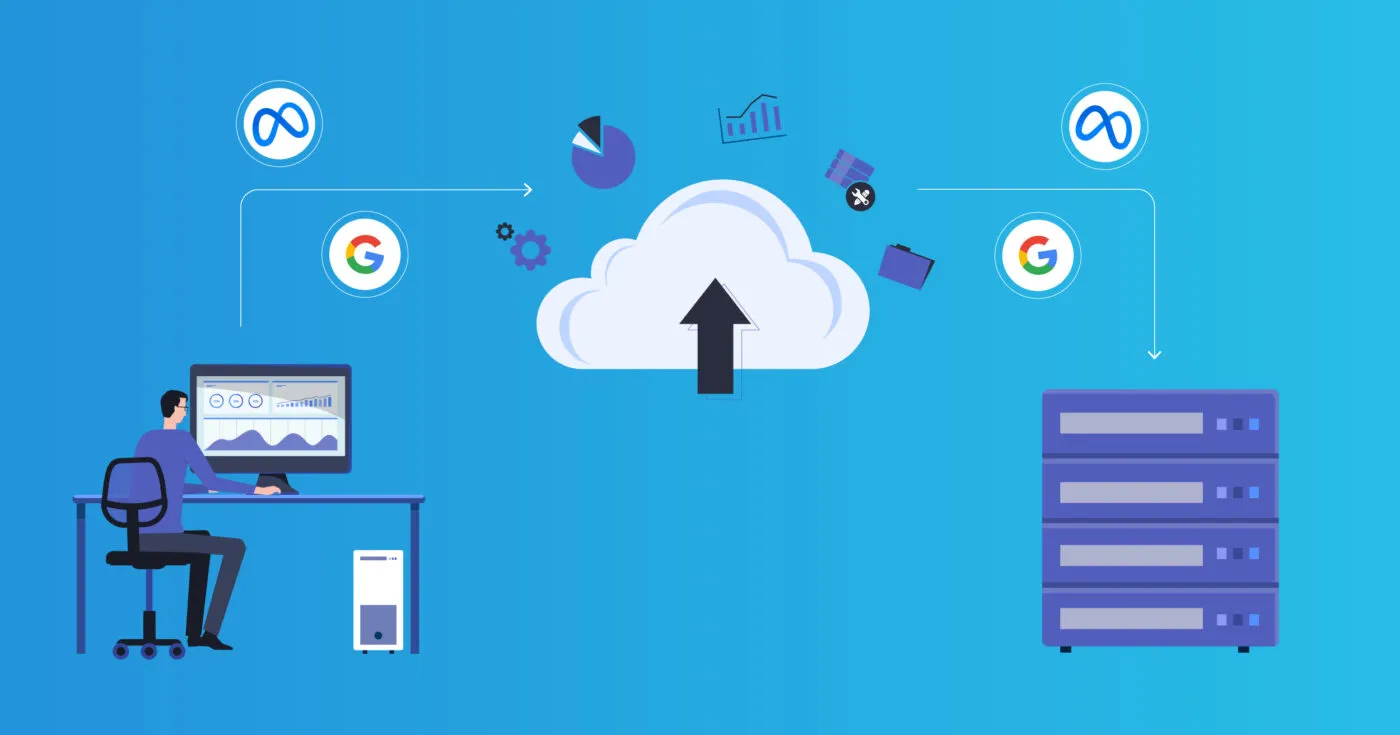
Server side tracking routes events through your own server or a managed server endpoint before they reach analytics tools and ad platforms.
Instead of sending data directly from the browser to multiple destinations, your site or backend sends it to a controlled endpoint.
That endpoint applies rules and then forwards approved events to the right tools.
Why This Matters In Everyday Marketing Work
When tracking runs only in the browser, you are exposed to script blockers, loading issues, tag conflicts, and inconsistent firing. Server side tracking reduces your dependency on the browser for key conversion events, which is where many performance decisions live.
The Key Benefits Of Server Side Tracking For Marketers
Server side tracking benefits are easiest to understand when you tie them to the problems marketers face weekly.
Benefit One: More Reliable Conversion Tracking
Conversions are the backbone of optimization. If conversions are missed, duplicated, or delayed, every downstream decision suffers.
Server side tracking can help because:
- It Can Reduce Lost Conversion Events When Browser Scripts Fail.
- It Can Standardize Event Delivery Across Devices And Browsers.
- It Can Reduce Tag Conflicts That Cause Double Counting.
This does not mean conversion counts will become perfect everywhere. It means your core conversion signal becomes more stable, which improves decision quality.
Benefit Two: Better Control Over What Data Goes Where
Many marketers inherit a tracking setup where dozens of tools receive data, and nobody is fully sure what is being shared. That creates risk and weakens trust.
Server side tracking can help because:
- It Gives You A Central Routing Point For Events.
- It Lets You Decide Which Destinations Receive Which Events.
- It Helps You Reduce Unnecessary Data Sharing By Default.
Control is a marketer’s benefit because it prevents accidental changes, avoids vendor sprawl, and makes audits easier.
Benefit Three: Stronger Performance For The Website Experience
Tag-heavy websites can become slow, especially when multiple scripts load on every page. Page speed and user experience affect marketing outcomes, even if the tracking team is not thinking about it daily.
Server side tracking can help because:
- It Can Reduce The Number Of Heavy Third-Party Scripts Running In The Browser.
- It Can Shift Some Processing Away From The Page Load Path.
- It Can Reduce The Chances Of A Tag Breaking The Page Experience.
This does not mean you remove every client side tag. It means you can be more intentional about which scripts truly need to run in the browser.
Benefit Four: Cleaner Event Standardization Across Tools
A common marketer problem is conflicting numbers. Analytics shows one conversion count. The ad platform shows another. The CRM shows a third. That leads to endless debates and slow budget decisions.
Server side tracking can help because:
- It Lets You Standardize Event Names And Properties Before Sending Them Out.
- It Helps You Maintain One Definition For Core Conversions Across Destinations.
- It Reduces “Similar But Different” Events That Create Reporting Drift.
Standardization is one of the most practical server side tracking benefits because it reduces confusion across teams.
Benefit Five: More Consistent Consent Enforcement
Consent is not only a legal requirement. It also affects the quality of your data and the stability of your tracking setup. When consent logic is scattered across tags, it is easy for behavior to drift.
Server side tracking can help because:
- It Centralizes Routing Rules Based On Consent States.
- It Reduces The Chances Of A Tag Accidentally Firing Before Consent Is Known.
- It Makes It Easier To Prove What Was Sent Or Blocked Under Different Preferences.
This is especially helpful when you have multiple regions, different privacy expectations, or frequent changes to your marketing stack.
Benefit Six: A Stronger Foundation For Cookieless Measurement
As third-party cookies become less useful, marketers rely more on first-party signals and clean conversion events. Server side tracking can strengthen that foundation.
Server side tracking can help because:
- It Makes High-Value Conversion Events Less Dependent On Cookies.
- It Supports More Stable First-Party Event Collection And Routing.
- It Helps Preserve Source Context When Tied To First-Party Storage And Backend Systems.
The goal is not to recreate the old cookie world. The goal is to keep the measurement useful when visibility is limited.
Benefit Seven: Easier Troubleshooting When Something Breaks
When conversions drop, teams often spend hours checking tags, browser behaviors, and platform updates. Server side tracking can make the investigation more straightforward if it is set up with clear logs.
Server side tracking can help because:
- It Provides A Clear Record Of What Events Were Received And Routed.
- It Helps You Isolate Whether The Issue Is Collection Or Destination Delivery.
- It Makes It Easier To Test Changes In Controlled Environments.
This saves time during the moments when marketers need answers quickly.
The Use Cases Where Marketers See The Biggest Wins
Not every tracking event needs a server side approach. The biggest benefits show up when you apply it to the outcomes that drive budget decisions.
Use Case One: Paid Media Conversion Signals
If ad platforms rely on conversion events to optimize delivery, stable signals matter. Server side routing can reduce missed events and keep definitions consistent across platforms.
Use Case Two: E-commerce Purchases And Checkout Events
Purchases are high-value events with clear business truth. Routing them server side can help align reporting and reduce loss from client-side script issues.
Use Case Three: Lead Generation And Demo Requests
For B2B teams, lead events often trigger workflows in CRMs and ad platforms. Server side tracking can help standardize the “lead submitted” and “demo booked” definitions and reduce duplicate counts.
Use Case Four: Subscription Upgrades And Renewals
Upgrades and renewals often happen inside product systems, not only on the website. Server side tracking helps connect these backend events to marketing reporting without fragile browser dependencies.
What Server Side Tracking Does Not Automatically Fix
It helps to be clear about what server side tracking benefits can and cannot do.
It Will Not Make Attribution Perfect
You will still have partial journeys and differences between platforms. The goal is a more stable conversion, truth, and clearer reporting layers.
It Will Not Remove The Need For Consent Choices
Consent still applies. Server side tracking should strengthen enforcement, not bypass it.
It Will Not Replace Good Event Design
If your event definitions are messy, server side routing will simply move the mess to a different layer. Event planning still matters.
How To Get The Benefits Without Creating Complexity
Marketers get value when server side tracking is introduced in a controlled way.
Start With A Small Set Of Core Conversions
Pick one or two high-value events, such as purchase completed or demo booked. Make those stable first.
Keep Client Side Tracking For Lightweight Interactions
Clicks and scroll depth can stay client side. Server side tracking is best reserved for the events that drive spend decisions.
Validate Against Business Truth
Compare server side event counts to backend or CRM truth. If there is a gap, investigate and document the reason.
Make The Setup Transparent
Ask for clear logs and a debugging workflow. Your team should be able to answer what was sent, where it went, and why it was allowed.
Assign Ownership Early
Tracking drifts when nobody owns it. Assign owners for event definitions, routing rules, consent logic, and reporting.
A Simple Way To Decide If Server Side Tracking Is Worth It
Server side tracking is usually worth prioritizing if:
- You Depend On Conversion Signals To Manage Paid Spend.
- You See Regular Mismatches Between Analytics, Ads, And CRM.
- You Have Frequent Tag Breaks Or Unexplained Drops.
- You Need Stronger Control Over Data Sharing And Consent Rules.
- You Want A Stable Foundation As Measurement Becomes More Privacy-Limited.
If those issues are rare for your team, a lighter approach may be enough. If they are common, server side tracking benefits show up quickly.
Why These Benefits Matter For ROI
Marketers improve ROI when they can trust their inputs. Stable conversions lead to better bidding and budget allocation. Cleaner definitions lead to fewer internal debates and faster decisions. Stronger control over data flow reduces risk and prevents tool sprawl. Website performance improvements reduce friction that quietly hurts conversion rates.
The biggest server side tracking benefit is confidence. No confidence in a dashboard. Confidence in making decisions that move the budget toward outcomes instead of guesswork.
FAQs
1) What Is Server Side Tracking
Server side tracking routes events through your own server or server endpoint before sending them to analytics tools and ad platforms. It can improve control and reliability for key conversion events.
2) What Are The Main Server Side Tracking Benefits For Marketers
The main benefits include more reliable conversion tracking, better control over data routing, improved site performance through fewer heavy browser scripts, cleaner event standardization, and more consistent consent enforcement.
3) Does Server Side Tracking Replace Client Side Tracking
Not usually. Many teams use a hybrid setup. They keep lightweight engagement tracking client side and move high-value conversions server side.
4) Does Server Side Tracking Work In A Cookieless Environment
It can help, especially for high-value conversions, because it reduces dependence on browser-based scripts and supports first-party event collection. It does not recreate full cookie-era attribution, but it strengthens measurement.
5) What Is The Fastest Way To Start With Server Side Tracking
Start with one or two high-value conversion events, validate them against backend or CRM truth, and build a clear debugging workflow. Expand only after the foundation is stable.



Post Comment