Rats vs. Mice: What Their Differences Mean for Your Home
It always starts small.
A faint noise at night. Something moved, but you don’t know where. Maybe a few droppings tucked away in a cabinet.
Then you ask, “Is it a rat? Is it a mouse?”
At the moment, the distinction may feel unimportant. Whatever it is, you don’t want it in your house. Fair enough. But not knowing what you’re actually dealing with is one of the reasons why many rodent problems drag on longer than they should, notes Service Star Realty Buckeye team.
Rats and mice may be fairly similar, but inside a home, they behave differently and cause different problems. Likewise, they respond to different solutions.
In places like Texas, with its unique combination of warm weather, older homes, and ongoing development, both rats and mice are common pests. That’s why a professional Fort Worth rodent control approach starts with correct identification. Before setting traps and bait or sealing any gaps, it helps to know what you’re up against so you can address it effectively.
The Differences You’re Most Likely to Notice
You don’t need to get a perfect look at a rat or a mouse to learn something useful about it. Hopefully, you won’t have to get any close to it to figure it out!
Most people can piece things together from brief sightings, sounds, or traces left behind.
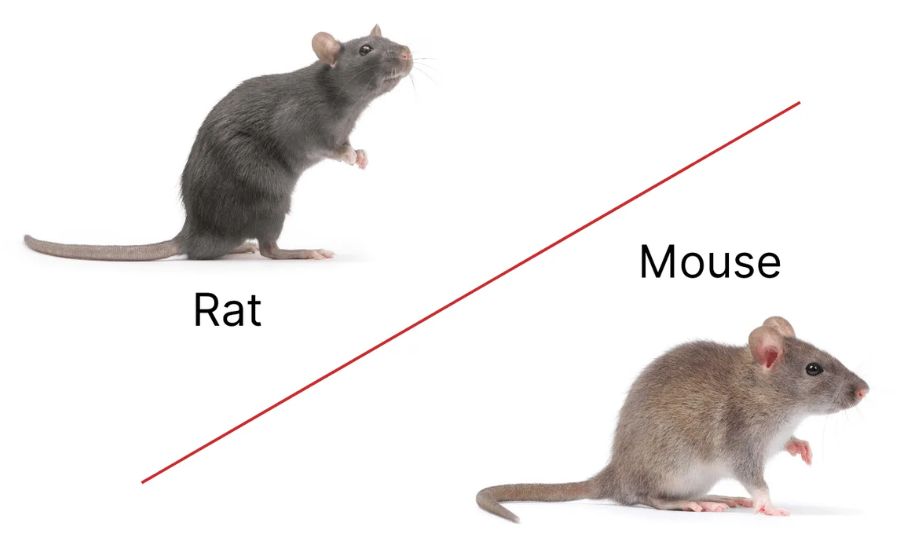
- Size is the first thing people notice. Mice are small and light. Rats, well, you never expect them to be that big!
- Body shape fills in the picture. Mice tend to look delicate, with thin tails, large ears, and narrow heads. Rats are less graceful: sturdier, thicker tails, smaller ears, and heavier bodies.
- Droppings are a clear clue. Mouse droppings are small, dark, and pointed, about the size of a grain of rice. Rat droppings are larger and more blunt.
- Sound matters when sight doesn’t. Light scratching or soft scurrying is usually the work of mice. Rats are responsible for louder movements, gnawing, or the sense that something substantial is moving behind walls or ceilings.
When you are in the stage of identification, you don’t need full certainty. Paying attention to the patterns is often enough to steer you in the right direction.
Different Animals, Different Behavior
Once settled inside a house, rats and mice don’t just take up space; they interact with the environment differently.
Being naturally curious, mice like to explore quickly, investigate any object that catches their eye, and move freely between rooms. That curiosity is why they often show up in kitchens and pantries first, even though those areas tend to be busy.
Rats, on the other hand, are more cautious: they’re wary of new objects and tend to avoid unfamiliar traps or bait. Rats like to stick to hidden routes along walls, through ceilings, and under floors. This is why people usually claim to hear them without seeing them.
These differences in behavior directly influence how the problem develops. While mouse infestations typically increase in numbers, rat issues usually escalate through damage.
What Those Differences Mean for Rodent Control
This is where many homeowners run into trouble.
Traditional snap traps can be highly effective for mice because they are willing to approach them quickly. When placed in strategic places (such as behind appliances or near trash cans), results can be very fast.
With rats, however, the same traps may sit untouched for days, not because they’re placed incorrectly, but because rats’ instincts make them distrustful of such devices.
Bait presents a similar challenge. Rats may test new food sources very cautiously, if they don’t ignore them altogether first, while mice tend to sample widely.
None of this means that DIY efforts are foolish. The point is, rather, that they’re situational and heavily dependent on knowing which rodent you’re dealing with.
How Misidentification Changes the Course of the Problem
Misidentifying a rodent doesn’t just slow things down, but it may inadvertently aggravate the entire problem.
When rats are mistaken for mice, the focus tends to stay on surface-level fixes, like setting traps and bait, in hopes of quick results. Meanwhile, rats establish more and more nesting areas in walls, attics, or basements. Over time, they disturb insulation, chew on wiring, and create unpleasant odors. What began as noises at night has suddenly become a sanitation issue that is much more challenging to resolve.
When mice are mistaken for rats, the opposite happens: the response is heavier and more centralized. Attention stays on one or two problem areas while mice continue roaming freely through cabinets and storage spaces. And since mice spread contamination more broadly than they cause damage, the risks associated with food exposure and surface contamination often go unnoticed.
In both cases, the issue isn’t the wrong fix; it’s the initial assumptions that shape what homeowners look for, where they focus their efforts, and how long they wait before acting. Getting the identification right early prevents the problem from becoming much bigger.
Clear Signs the Problem Has Escalated
There’s a point where relying on trial and error stops making sense, and there’s no shame in that. Rather, it’s important to recognize when it’s time to seek professional assistance.
Clear signals include:
- Seeing rodents repeatedly despite ongoing trapping.
- Hearing constant activity inside walls, ceilings, or insulation.
- Droppings returning soon after cleanup.
- Gnawing damage to wood, wiring, or stored materials.
- Any situation where health or structural risks are increasing.
Takeaway: Clarity First
Although rats and mice are equally repulsive, they are not interchangeable problems. Treating them as if they were is one of the main reasons infestations take longer to solve. Taking the time to understand what you’re dealing with before reacting often saves you time, money, and stress.
Whether you’re handling the situation yourself or working with experienced providers, the principle stays the same: the right solution starts with the right diagnosis. Once that’s clear, everything else becomes much easier to handle.




Post Comment