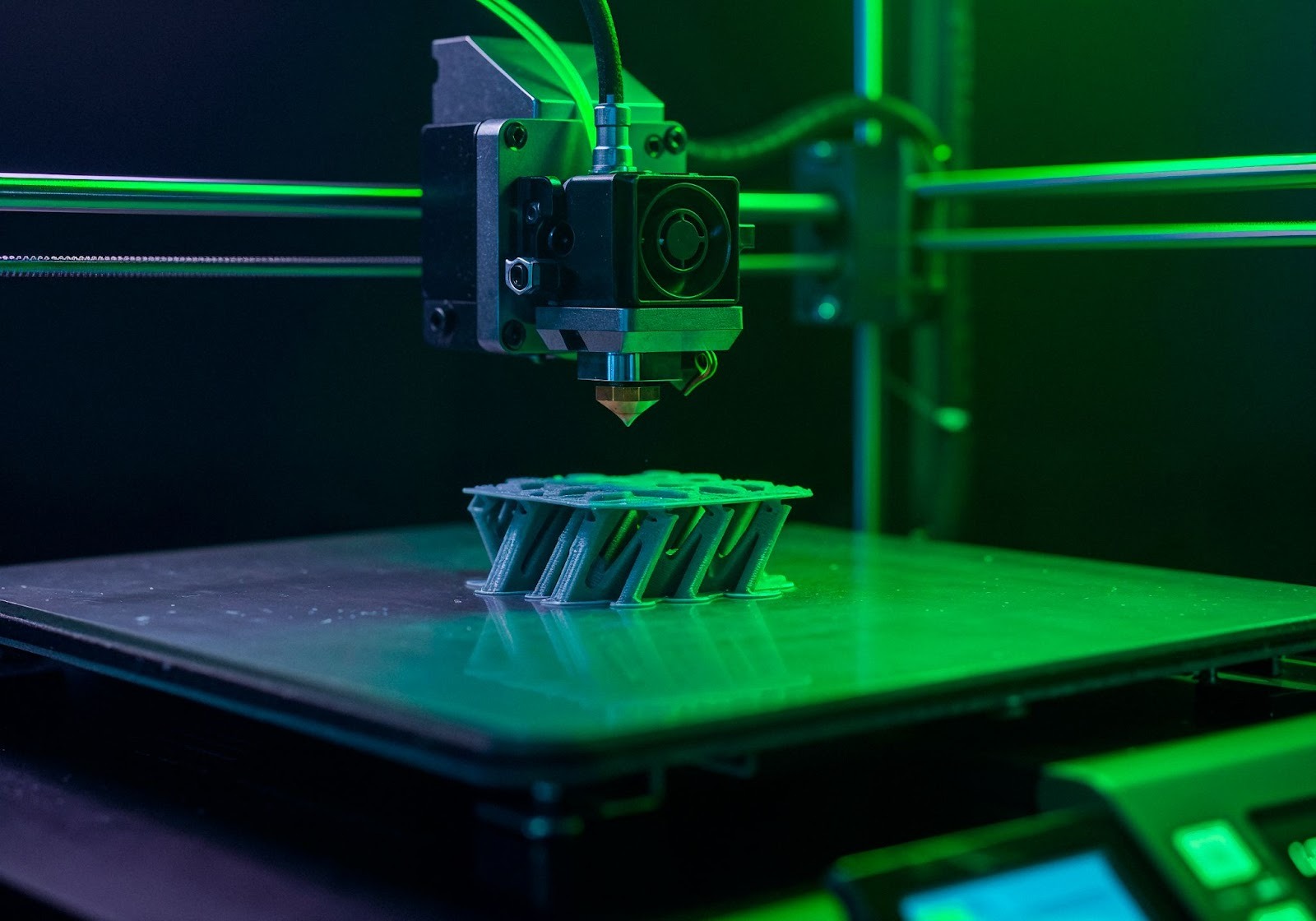
The E‑Commerce of Manufacturing: Online 3D Printing Meets Digital Marketplaces
Manufacturing is changing fast. Not long ago, creating a custom part meant long wait times, large minimum orders, and complicated supplier searches. Today, things look very different. Online 3D printing platforms and digital marketplaces are bringing manufacturing into the world of e-commerce.
Instead of long emails and slow quotes, businesses can upload a design, compare options, and place an order in minutes. This shift is making production faster, easier, and more accessible for startups, engineers, and large companies alike.
As online tools continue to grow, manufacturing is starting to work a lot like online shopping, simple, flexible, and available to anyone with a good idea.
The Digital Manufacturing Revolution: Where E-Commerce Meets 3D Printing
We’re witnessing something genuinely transformative here—a shift in how things get made that rivals the first industrial revolution in scope. The difference is that this one blends breakthrough manufacturing technology with the same ease and accessibility people now expect from digital platforms. With 3D printing services online, businesses and individuals can move from idea to production faster than ever, ordering custom parts with the same convenience as shopping online.
Evolution From Traditional Supply Chains to Online 3D Printing
Think about the old way for a second. Long supply chains. Minimum quantities that forced you to buy way more than needed. Capital requirements that made you think twice before even trying. E-commerce manufacturing throws all that out the window.
The previous model trapped you in guessing games. How much inventory should you warehouse? What will demand look like three months from now? Do you overproduce and waste money or underproduce and lose sales? The digital manufacturing marketplace approach sidesteps most of that anxiety.
You produce what’s actually needed, reducing waste and unlocking capital that was previously stuck gathering dust in a warehouse somewhere.
Driving Forces Behind Digital Manufacturing Marketplaces
A handful of tech advances are really accelerating this whole movement. AI now manages tasks ranging from instant quote generation to predicting quality issues before they happen.
Automation has pushed consistency to levels humans can’t match manually. And here’s something clever: decentralized manufacturing networks mean your component might get produced at a facility fifteen minutes from your office rather than halfway across the world, slashing delivery times.
The data angle matters more than you’d think. These platforms crunch information from thousands of past jobs to recommend ideal print settings, material choices, and surface finishes. They’re constantly getting smarter about what succeeds and what fails, smoothing out rough edges in the process for everyone using them.
Grasping how technology and commerce have merged is just scratching the surface, now let’s dig into how this digital shift is dismantling traditional manufacturing barriers and opening doors that didn’t exist before.
Navigating Online 3D Printing Services: Platforms Fueling Industry Growth
The additive manufacturing marketplace has blown up with platforms offering different strengths, capabilities, and niches. Choosing the right one? That’s more critical than most people realize.
Leaders in 3D Printing Online Platforms
A few platforms have separated themselves from the pack. Shapeways made its name with consumer customization. Xometry attracts engineering teams with instant pricing and massive manufacturing networks. Hubs (you might know it as 3D Hubs) link buyers with local makers across the globe.
Sculpteo zeroes in on professional materials and premium finishing. Increasingly, businesses depend on 3d printing services online that bundle rapid quoting with sophisticated material libraries, putting professional-grade production within reach for both bootstrapped startups and established enterprises.
What works for one company might not work for you. Some platforms dominate at high-volume runs. Others specialize in ultra-precise aerospace or medical components where tolerances matter down to microns.
The diversity actually works in your favor, there’s likely a platform that matches your exact requirements.
Custom 3D Printing Services for Every Industry
Custom 3D printing services have penetrated basically every industry you can name. Surgeons work with patient-specific implants and surgical planning tools. Check this out: a thorough review found that incorporating 3D printing into surgical workflows meaningfully shortened operation times in 42 of 227 studies examined.
Automotive teams prototype fresh concepts in days instead of months. Consumer brands gauge market interest before dropping serious money on tooling.
Business models differ too. B2B platforms target industrial clients with technical assistance and volume discounts. B2C services help individuals create custom jewelry or hard-to-find replacement parts. P2P marketplaces directly connect designers with people needing their work. Integration with your existing e-commerce stack makes ordering feel no different than buying office supplies.
We’ve covered why digital manufacturing marketplaces are reshaping the industry. Now let’s explore which platforms lead this revolution and how they’re democratizing custom production for everyone from hobbyists to major manufacturers.
Unlocking the Business Benefits: Scalability, Flexibility & Global Access
The genuine power of 3D printing online platforms shows up when you examine what they unlock for businesses competing in markets that change overnight.
Streamlined Prototyping, Mass Customization & On-Demand Production
Lead times that stretched for weeks now compress into days. You can iterate designs rapidly, evaluating multiple variations without draining your budget. Low-volume production suddenly makes economic sense, ten units costs roughly the same per-unit as ten thousand. Complex geometries requiring expensive tooling? Now they’re routine.
This agility extends to customization at scale. Every single unit can vary slightly without slowing anything down or driving costs through the roof. Traditional manufacturing simply cannot deliver that combination.
How E-Commerce Manufacturing Empowers SMEs and Startups
Small businesses face genuine hurdles around equipment financing and talent acquisition. Most must borrow money to finance new equipment and those that experience challenges in finding and retaining skilled labour may find capacity and production under pressure.
Investing in digital printing capabilities and automation can help mitigate employment costs, reduce waste associated with analogue production, and increase production flexibility to manage last minute orders, no matter the volume.
Startups can finally compete toe-to-toe with legacy players by tapping into identical manufacturing capabilities through online platforms. You’re not tying up capital in machines that sit unused. Instead, you only pay for actual production, exactly when you need it. This democratization genuinely levels the playing field.
Having examined the leading platforms and what they offer, let’s look at the concrete business advantages pushing companies of every size toward e-commerce manufacturing.
Frequently Asked Questions
How are online 3D printing platforms changing manufacturing?
Online 3D printing platforms make manufacturing faster and easier. Instead of contacting multiple suppliers and waiting days for quotes, users can upload a design, choose materials, compare prices, and place an order online. This saves time and allows businesses to produce parts on demand without large minimum orders.
What are digital manufacturing marketplaces?
Digital manufacturing marketplaces are online platforms that connect customers with manufacturing providers. They work like e-commerce sites, where users can explore services, check pricing, and order production directly. This helps companies find the right supplier quickly and manage projects more efficiently.
Who can benefit from online 3D printing services?
Startups, product designers, engineers, and even large manufacturers can benefit from online 3D printing services. These platforms make it easier to prototype, test designs, and produce custom parts without investing in expensive equipment or large production runs.
Smarter Manufacturing
Manufacturing is entering a new phase where speed, flexibility, and efficiency matter more than ever. From faster production cycles to reduced material waste, modern fabrication methods are helping companies rethink how products are designed, produced, and delivered. As more industries adopt these capabilities, the gap between traditional processes and digital manufacturing will only grow.
Businesses that explore these solutions today position themselves to respond faster to market demands, improve supply chain resilience, and unlock new opportunities for innovation in the years ahead.



Post Comment