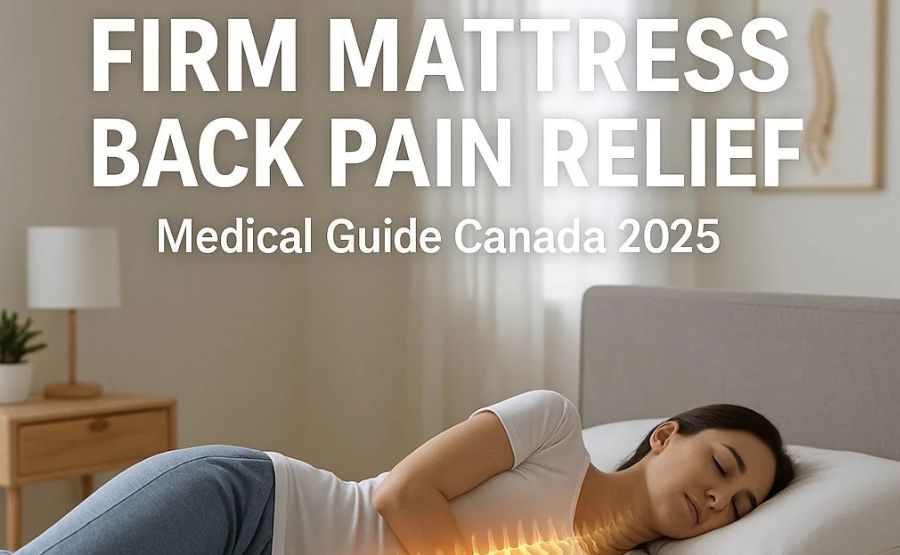
The Firm Mattress Myth: A Back Pain Sufferer’s Guide to Finding True Support
For decades, the advice for a bad back has been simple: “get a firmer mattress.” But what if that rock-hard solution is actually making your sleep worse? Many people buy an extra firm mattress hoping for relief. Instead, they find new aches and pains.
The truth is simple. The best mattress is not always the hardest one. This guide will help you understand the difference between a firm feel and true support. We will show you how to find the right firm mattress for your needs in 2026.
Key Takeaways
· Firm vs. Supportive: The goal is a supportive mattress that keeps your spine aligned, not just a hard one. A mattress that is too firm can cause pain.
· Your Body Matters: The right firmness depends on your body weight and primary sleeping position.
· Materials are Key: Modern hybrid mattresses often provide the best balance of firm support and pressure-relieving comfort.
· Labels Can Mislead: Terms like “orthopedic mattress” are often for marketing. Focus on the mattress’s features, not just its name.
· Try Before You Commit: A sleep trial of at least 100 nights is crucial, as your body needs time to adjust to a new sleep surface.
The Science of Support
To get healthy sleep, your spine needs to stay in a neutral position. Think of a straight line running from your head to your tailbone. The right mattress holds this line all night.
A mattress that is too soft lets your heaviest parts sink too deeply. Your hips drop down too far. This curves your spine and can lead to lower back pain. It feels cozy at first. But your muscles have to work all night to try and support you.
A mattress that is too firm creates its own problems. It doesn’t let your shoulders and hips sink in at all. This pushes your spine out of alignment. It also creates painful pressure points. You might wake up with a sore shoulder. You might feel numbness in your arm.
The best mattress is firm enough to support your spine. But it has enough give to contour to your body’s natural curves. It holds you up without pushing against you.
A landmark study in The Lancet found something important. People with chronic back pain reported less pain when sleeping on medium-firm mattresses. This was compared to very firm ones. This shows that the “just right” feel is more important than extreme hardness.
Firm vs. Orthopedic Mattress
When shopping, you will see the words “firm” and “orthopedic” used a lot. It is important to know what they really mean. This way you won’t be misled by marketing.
An “orthopedic mattress” sounds official. But it is mostly a marketing term. There is no medical standard for what makes a mattress orthopedic. It suggests the mattress is designed for back and joint support. But the name alone is not a promise of quality.
A “firm mattress” describes the feel of the mattress. It is usually rated on a scale of 1 to 10. One is very soft and 10 is very firm. A firm mattress typically falls in the 7-9 range. This is about how hard the surface feels when you lie on it.
The key is to look for supportive features, not just a label. A truly helpful mattress provides zoned support and pressure relief. This is true whether it’s called orthopedic or not.
| Feature | Firm Mattress | Orthopedic Mattress |
| Main Focus | Feel and hardness | Function and support |
| Definition | A rating on a firmness scale (e.g., 7-9/10) | A marketing term implying back/joint support |
| How to Judge | Based on personal comfort preference | Based on features like zoned support and materials |
Who Truly Benefits from a Firm Mattress?
A firm mattress can be a great choice for some people. But it is not for everyone. The right choice depends mostly on your sleep style and body weight.
Who It’s For:
· Stomach Sleepers: If you sleep on your stomach, a firm mattress is often your best bet. It prevents your hips from sinking. This keeps your spine from arching into a painful U-shape. This is a common cause of lower back pain for stomach sleepers.
· Back Sleepers: Back sleepers generally need a surface that provides consistent support. They need support along the entire length of their body. A medium-firm to firm mattress can do this well. It keeps the spine in a neutral position without too much sink.
· Heavier Individuals (over 230 lbs): People with higher body weight need a firmer surface to get proper support. A soft mattress can cause them to sink too far. This puts the spine out of alignment. A firm or extra-firm mattress provides the durable support needed to prevent this.
Who Should Be Cautious:
· Side Sleepers: Most side sleepers should avoid a very firm mattress. According to experts on sleep posture, side sleeping requires the mattress to contour to the body. A firm surface can create intense pressure on the shoulder and hip. This causes pain, numbness, and poor alignment. They usually need a medium to medium-firm mattress with more cushioning.
· Lighter Individuals (under 130 lbs): Lighter sleepers may not weigh enough to sink into a firm mattress. For them, it can feel like sleeping on the floor. They will not experience any of the contouring benefits. They may develop pressure points. A softer mattress is often a better fit.
· Those with Joint Pain: People with conditions like arthritis often need more cushioning. This helps soothe their joints. A firm mattress can feel harsh and increase pain at pressure points. A mattress that balances softness and support is usually more comfortable.
How to Choose the Right Firm Mattress: A 3-Step Guide
Finding the perfect firm mattress in 2026 is about looking beyond the label. It is about understanding what makes a mattress supportive for you. Follow these three steps to make a confident choice.
Step 1: Look Beyond Firmness to Support & Materials
The word “firm” can mean different things depending on the material. A traditional innerspring mattress feels firm because of its steel coils. A memory foam mattress can feel firm if it uses very dense foam. A latex mattress feels firm but also buoyant and responsive.
Today, hybrid mattresses offer a modern solution. They combine the strong support of pocketed coils with the pressure relief of foam or latex on top. This design gives you the “best of both worlds.” You get a strong foundation that keeps your spine aligned. You also get a comfort layer that cushions your joints.
Step 2: Consider an Ergonomic, Zoned-Support Design
The most advanced mattresses now use zoned support. This means the mattress is firmer in some areas and softer in others. Typically, it is firmer in the center third. This provides extra support under your lumbar and hips. It is often softer at the shoulder area. This allows side sleepers to sink in just enough.
This intelligent design provides support where you need it. It also provides pressure relief where you want it. It is the key to finding a mattress that feels firm but not hard.
For those seeking this ideal balance, a modern ergonomic hybrid mattress is often the perfect solution. Innovations from brands like Sleepmax are changing the game. For instance, their Sleepmax Podium™ model is an excellent example of a technologically advanced firm mattress that isn’t just hard—it’s intelligently supportive. It uses a hybrid design with zoned support to provide robust stability for your spine while a latex comfort layer prevents the pressure points common with traditional firm beds.
Step 3: Always Check the Trial Period and Warranty
This might be the most important step. From our experience, your body needs time to adjust to a new sleep surface. This is especially true for a more supportive one. This adjustment period can take anywhere from two to four weeks.
For this reason, you should never buy a mattress without a generous sleep trial. Look for companies that offer at least a 100-night trial. This gives you more than three months to sleep on the mattress in your own home. You can decide if it is truly right for you. A long warranty (10 years or more) is also a sign of a quality, durable product.
Conclusion: Your Next Step to Better Sleep
The old advice to simply get a rock-hard bed for back pain is outdated. The search for better sleep is not about finding the firmest mattress you can stand. It is about finding the most supportive mattress for your unique body and sleep style.
Stop chasing the myth of a hard mattress. Start searching for personalized, zoned support. You will be on your way to the truly restorative sleep you deserve.
Frequently Asked Questions about Firm Mattresses
1. Can a firm mattress cause back pain?
Yes, if it’s too firm for your body type and sleeping position. A mattress that doesn’t allow your shoulders and hips to sink in slightly can misalign your spine. It can also create pressure points, leading to pain. The key is finding a balance between firmness and contouring.
2. How long does it take to get used to a firm mattress?
There’s typically an adjustment period of 2-4 weeks for your body to adapt to a new sleep surface. This is especially true for a more supportive one. This is why a sleep trial of at least 100 nights is essential. It helps make sure the mattress is a good long-term fit for you.
3. Do firm mattresses get softer over time?
All mattresses will soften slightly over time as the materials break in. They respond to your body weight. High-quality materials like high-density foams and durable latex will maintain their support and feel for much longer. This is compared to lower-quality materials.
4. Is a firm mattress better for couples?
It can be, especially if both partners are back or stomach sleepers. It’s also good if they have higher body weights. A firm mattress often has better edge support than a very soft one. It also has less motion transfer, so you won’t feel your partner move as much. If partners have very different needs, a medium-firm mattress is often a good compromise.
5. What’s the best mattress topper for a bed that is too firm?
To soften a mattress that is too firm, a memory foam or latex topper is an excellent choice. A topper that is 2-3 inches thick can add a significant layer of pressure-relieving comfort. This can give you the cushioning you need. It won’t take away the underlying support of the firm mattress.




Post Comment