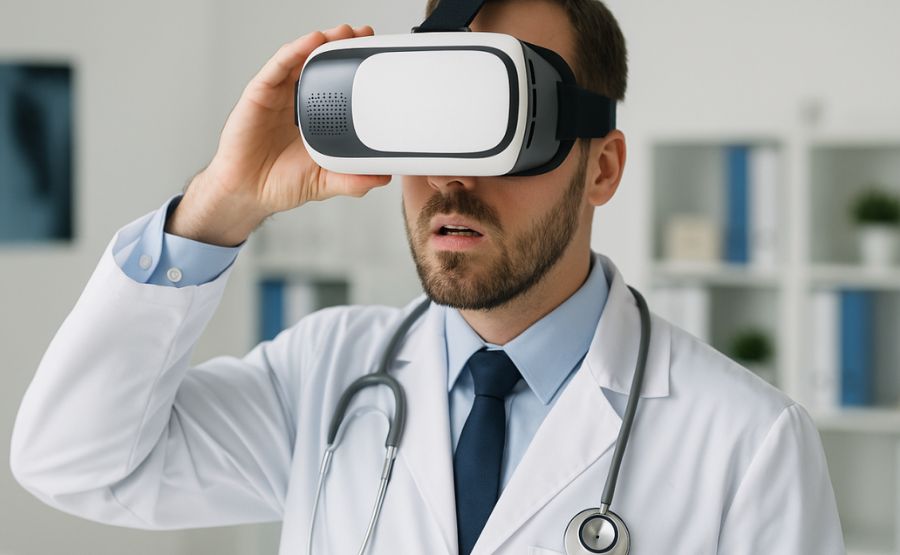
The New Reality: Transforming Medical Perspectives Through Virtual Immersion
The clinical environment is experiencing a significant shift as digital tools reshape traditional medical practices. Virtual reality in healthcare is no longer a futuristic concept confined to research labs; it is now a core part of contemporary clinical care.
In 2026, we are operating in a “New Reality” where digital and physical worlds merge, leading to patient care that is more compassionate, accurate, and readily available.
Mastering the Art of Precision: VR Surgical Simulation
A major evolution in surgical training moves the focus from observing and teaching to practicing numerous times before the first live procedure. A virtual surgery simulation offers a detailed, safe environment for surgical teams. Professionals can hone their technical abilities and critical thinking without the real-world risks associated with operating on a patient.
A VR surgical simulation provides an immersive, multi-sensory experience that goes beyond reading a static textbook. The system incorporates sophisticated haptic feedback, which mimics the natural resistance and texture of various tissues. Through sensory immersion, surgical teams gain key advantages:
- Practice for the Unexpected: Surgeons can repeatedly rehearse rare or complicated medical events, such as unexpected bleeding or anatomical irregularities, until the correct response becomes second nature.
- Detailed Anatomical Study: By transforming a patient’s CT or MRI data into a fully interactive 3D space, surgical teams can thoroughly explore a patient’s unique anatomy before any incision is made.
- Accelerating Skill Acquisition: Studies indicate that surgeons trained using VR platforms complete procedures up to 20% faster and commit significantly fewer errors compared to those trained through conventional methods.
Redefining the Patient Experience through Empathy
Beyond surgical applications, virtual reality healthcare simulation helps close the human connection gap in medicine. Immersion settings that function as a digital analgesic are advantageous to patients. Transporting a patient from a sterile clinic to a calming virtual scene effectively manages acute pain and reduces pre-operative anxiety, decreasing the need for strong medications.
For medical professionals, VR is a powerful tool for developing empathy. Digital age-suit simulations enable doctors to experience the world from their patient’s point of view. They can simulate the visual impairment of macular degeneration or the cognitive challenges of a psychotic disorder. Experiencing these conditions firsthand deepens the human connection, significantly improving bedside manner and the development of long-term care plans.
The Horizon of Immersive Medicine
Looking ahead, the combination of Artificial Intelligence and 5G network speeds is dramatically expanding the potential of virtual reality in medicine and surgery.
- Personalized Learning Paths: Training software now uses physiological data to gauge a learner’s progress. The system automatically adjusts the difficulty of a simulation to suit individual training requirements.
- Widespread Access: Immersive tele-presence technology allows a medical expert in a major city to mentor a trainee in a remote rural hospital in real-time. Expert knowledge can effectively be transported to any location where it is most needed.
- Building a Safety Standard: Digital rehearsal is quickly becoming a mandated safety benchmark, similar to flight simulations in aviation. This ensures that a surgeon’s first time performing a procedure on a patient is not their first time overall.
The “New Reality” represents more than just a technological update; it is a complete restructuring of the medical experience. The focus is clearly placed on safety, accessibility, and the profound human aspect of healing.




Post Comment