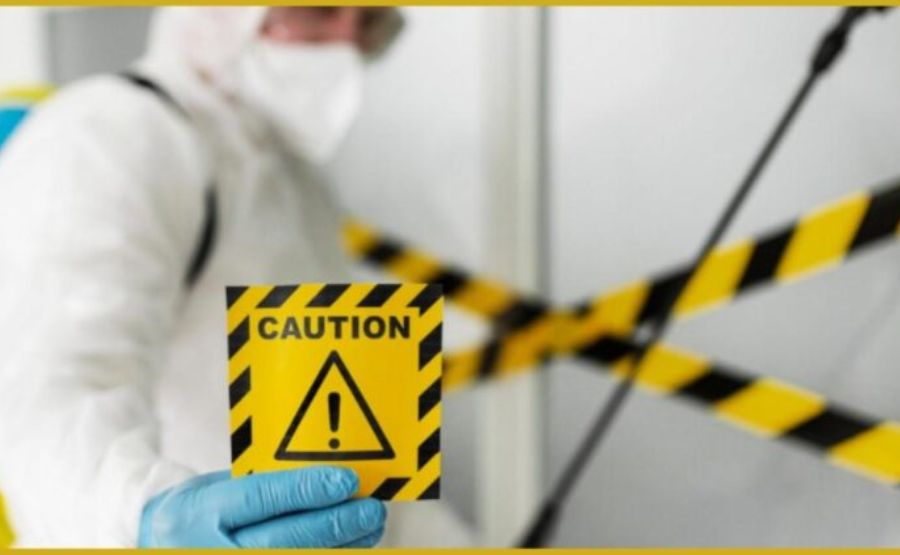
Understanding HIRA Full Form and Who Is Responsible for Conducting a Hazard Assessment in Your Workplace
Visit any workplace and you will discover potential risks that were just hiding there. Poorly insulated electrical wires at the back of the desk. Workers lifting incorrectly in a stockroom. Containers with chemicals that are not labeled properly. The question is never whether these dangers exist, it is rather if anyone is methodically searching for them and taking the necessary steps before someone gets injured.
This is where assessing workplace hazards becomes very important. But the problem is that many companies get tripped up at this point: They know that assessments have to be done, in fact, they even know what the methods are, however, they are still not very clear on who is actually supposed to be responsible for it. Management? Safety officers? Supervisors? Knowing the answer is crucial because having the accountability unclear means that some hazards of great importance are going to be overlooked.
Let’s do it step by step first the methodology and then the ownership question, so that your workplace can create a safety system that really works.
What Does HIRA Mean in Workplace Safety?
If you’ve heard the term HIRA thrown around in safety discussions, you might wonder what it actually means. The hira full form is Hazard Identification and Risk Assessment a systematic approach that helps organizations spot potential dangers before they cause harm.
Think of HIRA as your workplace safety roadmap. Instead of reacting to accidents after they happen, this framework helps you predict and prevent incidents through structured analysis.
Breaking Down the Components
A hazard identification, the “HI” part, has to do with locating anything in your workplace that could lead to injury, sickness or loss. It brings to mind the most dangerous things, for instance, unguarded machines but it also involves subtle risks like bad ergonomics, poor lighting or workplace stress factors.
The risk assessment, “RA” part, refers to the process of analyzing each hazard that was identified by taking into account the likelihood of occurrence and the seriousness of consequences. For instance, a minor hazard that frequently occurs might need more immediate attention than a very unlikely catastrophic risk.
Why Organizations Need HIRA
If there is no systematic way, then hazard assessment becomes random and subjective. One individual might be very good in recognizing equipment hazards but totally overlook chemical risks. Another person may concentrate on slip and fall accidents while ignoring ergonomics.
HIRA provides consistency. It ensures that your organization looks at workplace safety comprehensively rather than leaving it to chance or individual perception.
HIRA Process in Practice
Understanding the methodology helps clarify why different people need to be involved at different stages. The process typically follows four key steps.
Step 1: Identify All Potential Hazards
The process to start off with is a complete near-to-nothing study of your office. The walk-throughs by the teams, reports about accidents in the past reviewed, work processes analyzed, employees interviewed regarding their issues and any hazards in the equipment and materials checked up on are all going on.
The inventory done is with the intention of compiling a whole list of all possible sources of injuries. No matter how small or obvious it may be, everything should be recorded.
Step 2: Assess the Risk Level
After that, each of the dangers gets a risk rating that is usually done through risk assessment by asking the two questions: “What is the chance that the hazard will lead to an incident?” and “if it does occur, what would the damage be?”.
A majority of the companies will then use a risk-matrix combining the factors of likelihood and severity to assign a risk rating which is either high, medium or low. The process of prioritization here takes the first steps in deciding where to put the resources.
Step 3: Implement Control Measures
Moreover, the assessment if not followed by action will produce no results at all. According to the risk ratings, the team plans and carries out controls in the order of the hierarchy: completely eliminate the hazard if possible, replace it with something less dangerous, engineer controls built to minimize exposure, on-the-job controls like proper procedures and training enforced and finally, personal protective equipment to be utilized as the last line of defense.
Step 4: Monitor and Review
The workplace is constantly changing its face. The arrival of new machinery, upgrading of processes and introducing of different materials are all part of the scenario. HIRA programs that are capable of being effective entail regular appraisals to keep the assessments up-to-date and to keep the controls functioning as intended.
Defining Responsibility: Who Conducts Hazard Assessments?
Here’s where theory meets reality. Who is responsible for conducting a hazard assessment in your organization? The answer involves multiple layers of accountability, each playing a distinct role.
Executive and Senior Management
The ultimate accountability rests with the top management. While senior leaders do not individually carry out assessments, they are the ones who set the prerequisites for effective assessments. In this context, it refers to providing sufficient funding for safety programs, laying down unambiguous policies that put hazard identification as the number one priority, granting resources for the implementation of controls and modeling.
When executives treat safety as just another compliance checkbox, that attitude filters down through every level. Conversely, visible leadership commitment gives everyone else permission and resources to take safety seriously.
Individual Employees
The workers must play an active role in hazard identification. They have a direct experience of the work environment, they are the first to detect unusual equipment behavior, they are the ones who feel the physical strain of the tasks and they are the ones who know the practical realities that are not obvious to outsiders.
The atmosphere where employees feel they have the right to report hazards is psychological safety the belief that the raising of concerns will not lead to punishment or the employee being regarded as a complainer.
Joint Health and Safety Committees
Many organizations, especially larger ones or those in high-risk industries, establish formal safety committees with representatives from different departments and levels. These committees provide structure for regular hazard reviews, ensure diverse perspectives in assessments, build ownership across the organization and create formal channels for safety communication.
Moving Toward Proactive Safety Culture
The ultimate aim of hazard and risk assessment is not only to comply with safety regulations but also to create a risk aware organization where identification and control of risks is instinctive. This would mean that it is part of everyone’s natural work rather than a separate safety task.
This change in culture is possible when employees are able to see their hazard reports going through the process of being taken seriously and acted on, management always backing up safety through their decisions and the allocation of resources and even the incidents being a source of learning for the organization without pointing fingers or punishing anyone.
Once you have attained that stage, hazard assessment no longer feels like a mandatory requirement but becomes a routine way in which your organization operates.
Conclusion
Knowing both the HIRA acronym and the party responsible for hazard assessment forms the basis of industrial safety. The approach Hazard Identification and Risk Assessment provides you with a methodical way of working. Well-defined accountability at all levels ensures that this way of working is applied uniformly.
Keep in mind that the responsibility is collective but not scattered. The top management provides funding and direction, safety experts give their input and coordinate activities, foremen oversee the implementation of safety measures and workers provide feedback from their areas. Every function is vital. If those people operate together according to the structured HIRA methodology, workplace hazards will be discovered and controlled before they result in injuries.
The dilemma is not if your organization needs to carry out hazard assessments but rather whether you have made it so clear who does what that assessments are done regularly and result in significant actions. This clarity may well be the factor that distinguishes between the prevention of incidents and their subsequent investigation.



Post Comment