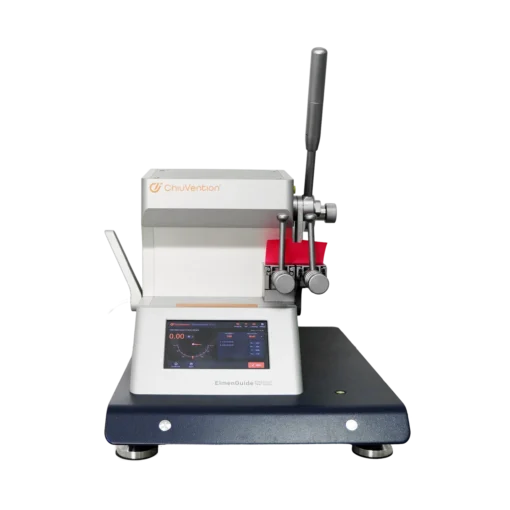
Understanding the Elmendorf Test: The Gold Standard for Tear Strength Analysis
In the world of material science and quality control, the ability of a material to resist tearing is a fundamental property. Whether it’s the fabric of a parachute, the packaging for a heavy product, or a sheet of specialty paper, tear strength is a critical parameter that determines performance, durability, and safety. The most recognized and reliable method for measuring this property is the Elmendorf Test.
This blog post will delve into the details of the Elmendorf test, its principles, applications, and how modern technology, like the Elmendorf Tear Tester, is making this essential analysis more accurate and efficient than ever before.
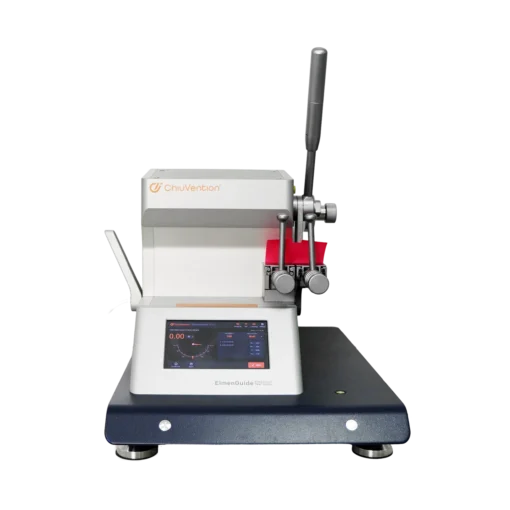
What is the Elmendorf Test?
The Elmendorf test is a standardized procedure used to determine the tearing strength of various materials, most commonly textiles, plastic films, and paper. In essence, it measures the average force required to propagate a single-rip tear of a specified length from a cut starting in the specimen.
Named after its inventor, the test is performed using an Elmendorf Tear Tester. This device operates on a simple yet ingenious principle: a pendulum swings by gravity, tearing the specimen, and the loss of energy by the pendulum is measured to indicate the force required to tear the material.
How Does the Elmendorf Tear Tester Work?
The core mechanism of an Elmendorf tester is a pendulum mounted on a low-friction bearing. Here is a step-by-step breakdown of a typical test procedure:
- Specimen Preparation: A specimen of specific dimensions is cut, and a small slit is made to initiate the tear. This ensures that the test measures tear propagation, not initiation.
- Clamping: The specimen is securely clamped between two jaws on the tester. One jaw is stationary, while the other is attached to the falling pendulum.
- Positioning: The pendulum is raised to a fixed, calibrated starting position, storing a precise amount of potential energy.
- The Test: A quick-release mechanism allows the pendulum to fall. As it swings down, the moving jaw attached to it tears the specimen from the pre-cut slit.
- Measurement: The pendulum continues its swing, but the energy lost in tearing the material prevents it from reaching its full height. The tester measures this loss, which is directly proportional to the tear strength of the material. The result is typically displayed in units like millinewtons (mN) or grams-force (gf).
Applications Across Industries
The versatility of the Elmendorf test makes it indispensable in several fields:
- Textile Industry: For evaluating woven and non-woven fabrics used in apparel, technical textiles, geotextiles, and industrial fabrics. It helps ensure that garments won’t easily tear during wear and that industrial fabrics can withstand operational stresses.
- Packaging Industry: For testing the tear resistance of plastic films, laminates, and flexible packaging materials. This is crucial for ensuring package integrity during shipping and handling, protecting the product inside.
- Paper and Pulp Industry: A classic application, the Elmendorf test is used to measure the internal tearing resistance of paper, board, and pulp. This property is key for products like printing paper, banknotes, and packaging cardboard.
The Evolution of the Tester: From Manual to Automatic
Traditionally, Elmendorf testers were purely mechanical devices, requiring operators to manually take readings from a scale and perform calculations. While effective, this process could be time-consuming and prone to human error.
Today, instruments like the Elmenguide Automatic Elmendorf Tear Tester from ChiuVention represent a significant leap forward. As highlighted on their product page, this modern equipment combines the established mechanical stability of the pendulum principle with intelligent digital control.
Key advancements include:
- Digital Precision: The tester automatically calculates the tear force, eliminating manual calculations and the potential for errors.
- Efficiency: It provides fast and accurate results, significantly speeding up the quality control process.
- User-Friendly Design: With a smart digital interface, operators can easily control the test, access data, and manage results.
- Standard Compliance: It is designed to meet international standards such as ISO 13937-1 and GB/T 3917-2009, ensuring that results are globally recognized and reliable.
This combination of robust mechanics and modern electronics makes it an ideal tool for modern quality control labs, academic institutions for material demonstrations, and production facilities in the textile, paper, and plastic sectors.
Conclusion
The Elmendorf test remains the cornerstone of tear strength analysis. By providing a clear, quantitative measure of a material’s resistance to tearing, it empowers manufacturers and researchers to develop better, more durable products. With the advent of automatic testers, this classic method has become more accessible, accurate, and efficient, solidifying its place as an essential quality assurance tool for years to come.




Post Comment