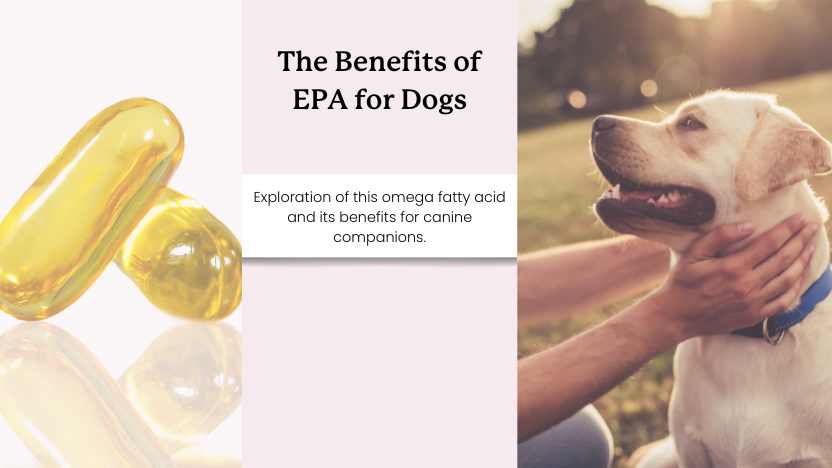
What Dog Parents Should Know About EPA and Omega-3s
If you’ve ever read the back of a dog supplement label and felt your eyes glaze over, you’re not alone. Terms like omega-3, DHA, and EPA get thrown around constantly in the pet health space, and it’s not always clear what any of them actually mean for the pup in your family. One nutrient worth understanding, specifically, is EPA, and why it keeps showing up in conversations about canine inflammation, joint health, and coat condition.
This isn’t just a niche topic for dog parents deep in the supplement rabbit hole. It’s a fairly fundamental piece of how a dog’s body manages its own inflammatory response, and it connects directly to day-to-day health in ways that are practical to know.
What the EPA Actually Is
EPA stands for eicosapentaenoic acid, a long-chain omega-3 fatty acid found primarily in cold-water marine fish like anchovies, sardines, and pollock. It’s classified as an essential fatty acid, which means dogs can’t produce it on their own. It has to come from diet or supplementation.
That distinction matters because many modern dog diets, particularly those built around kibble, tend to be higher in omega-6 fatty acids than omega-3s. Both are necessary, but when omega-6 intake significantly outpaces omega-3 intake, the body can spend more time in a state of elevated inflammatory activity than it needs to. EPA may help support a more balanced inflammatory response.
Dogs have a very limited ability to convert ALA, the plant-based omega-3 found in flaxseed and chia, into EPA. Research consistently puts that conversion rate at under 10%, which means plant-based omega-3 sources don’t provide meaningful EPA support for dogs. Marine-sourced EPA is the form dogs can actually use.
How EPA Supports Canine Health
The body uses fatty acids to produce eicosanoids, signaling molecules that help regulate inflammation, immune activity, and tissue repair. The type of fatty acid available shapes what kind of eicosanoids get produced. EPA tends to contribute to eicosanoids associated with more balanced, less prolonged inflammatory responses, which is why it gets attention across several health categories.
Research on the EPA fatty acid in dogs spans multiple conditions, and the findings are consistent in their direction: omega-3 supplementation from marine sources may help support joint comfort, skin health, cardiovascular function, and cognitive health in aging dogs. A systematic review published in Frontiers in Veterinary Science (PMC) found that EPA and DHA supplementation showed benefits across conditions, including allergic dermatitis, osteoarthritis, and cardiovascular disease in dogs, identifying anti-inflammatory and immune-modulating effects as the primary mechanisms.
For dog parents managing a pup with joint stiffness, itchy skin, or age-related changes, EPA is one of the nutritional tools worth discussing with a vet. It’s not a treatment for any condition, but it may help support the body’s ability to manage inflammation as part of a broader care approach.
Where EPA Comes From
The most reliable dietary sources of EPA for dogs are marine. Anchovies, sardines, and pollock are among the most common, and they sit low on the marine food chain, which means they accumulate fewer environmental contaminants than larger fish. Anchovy oil and pollock oil are widely used in fish oil supplements for dogs for exactly this reason.
Algae-based EPA is another option, particularly relevant for dogs with fish sensitivities. Certain marine microalgae, including schizochytrium, naturally produce EPA and DHA and are used in some supplements as a cleaner, more sustainable alternative to fish-derived oils.
Plant-based oils like flaxseed don’t serve as an equivalent source, despite the common misconception. The conversion pathway from ALA to EPA is too inefficient in dogs to provide meaningful support, so the source of omega-3 in a supplement matters more than the omega-3 label alone.
What to Look for in a Supplement
Not all omega-3 supplements are equal. A few things worth checking before adding one to a dog’s daily routine:
The ingredient list should name a specific marine source, such as anchovy oil, pollock oil, or algae oil, rather than a generic “fish oil” without further detail. Specific sourcing is a sign the manufacturer has given thought to contaminant levels and bioavailability.
EPA and DHA content should be listed separately in milligrams, not just as a combined omega-3 figure. Because different omega-3 fatty acids serve different functions, knowing the specific EPA amount matters.
The American Kennel Club’s guidance on fish oil for dogs notes that natural triglyceride oil is generally the most absorbable form, while ethyl ester formulations are more concentrated and purified. Both can be appropriate depending on the product, but it’s worth knowing what a supplement contains.
As with any addition to a dog’s diet, a conversation with a vet before starting a new supplement is the right first step. Dosing matters, and a vet can help set realistic expectations for what EPA may or may not do based on a specific dog’s health history.
The Bigger Picture
EPA isn’t a magic ingredient, but it’s one of the more well-researched nutrients in canine health, and the evidence base behind it is more substantial than what backs many other supplements on the market. For dog parents paying attention to what the pup in their family eats daily, understanding where EPA comes from, why marine sources matter, and what it actually does in the body is the kind of foundational knowledge that makes supplement decisions easier to navigate.
Digestive health, joint mobility, skin condition, and inflammatory balance are all connected. EPA doesn’t address all of them in isolation, but as part of a diet built around good ingredients and consistent daily nutrition, it’s a piece worth paying attention to.




Post Comment