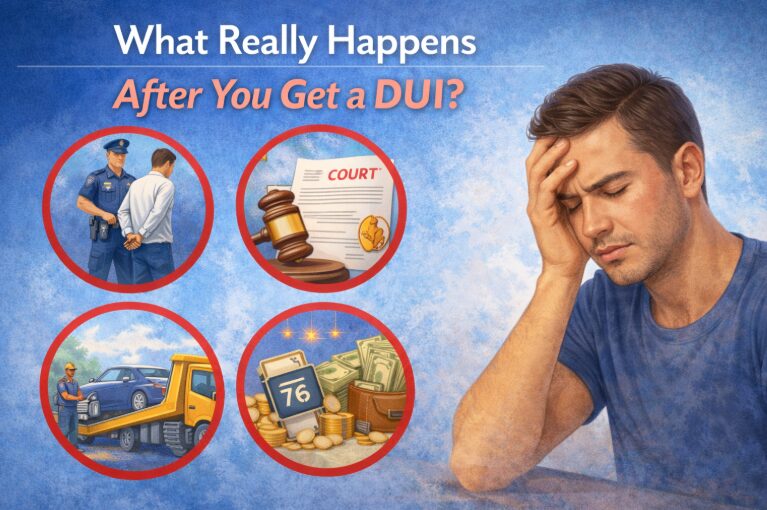
What Really Happens After You Get a DUI
Most people arrested for a DUI have no idea what is actually coming next. The arrest itself is jarring enough, but the process that follows is complicated, expensive, and full of decision points that most people are completely unprepared for.
If you or someone you know is navigating this situation right now, the single most important thing you can do is get help with DUI charges in Baltimore before the process moves further along without you having proper guidance.
Because here is the reality: a DUI does not end with the arrest. In many ways, the arrest is just the beginning.
The Immediate Aftermath Nobody Warns You About
The hours after a DUI arrest set the tone for everything that follows. After being processed at the station, most first-time offenders are released on their own recognizance or after posting bail. They walk out with paperwork they barely read and a court date circled on a piece of paper.
What most people do not realize is that two separate legal processes are now running simultaneously. There is the criminal case, which will play out in court. And there is the administrative process with the DMV, which can suspend your license completely independently of how the criminal case resolves.
In Maryland, for example, you have just 10 days from the date of arrest to request a hearing with the Motor Vehicle Administration to contest your license suspension. Miss that window and your license is automatically suspended whether you are ever convicted of a crime or not.
That 10-day clock starts ticking the moment you leave the station, and most people do not know it exists.
The Criminal Process Step by Step
Understanding the sequence of events helps remove some of the anxiety that comes from not knowing what is ahead.
| Stage | Typical Timeline | What Happens |
| Arrest and booking | Day 0 | Processed, BAC recorded, paperwork issued |
| Initial appearance or arraignment | 1 to 7 days | Charges formally presented, plea entered |
| Pretrial hearings | 4 to 12 weeks | Evidence reviewed, motions filed, negotiations begin |
| Plea agreement or trial | 2 to 6 months | Case resolved through plea or court proceeding |
| Sentencing | Days to weeks after resolution | Penalties formally assigned by judge |
| Post-conviction obligations | Ongoing | Fines, classes, probation, IID compliance |
Each of those stages involves decisions that carry real consequences. The arraignment, for instance, is where your initial plea is entered. Walking in without an attorney and entering a plea without understanding the strength or weakness of the prosecution’s evidence is a mistake that can limit your options significantly down the road.
What the Charges Actually Mean
DUI and DWI are often used interchangeably in everyday conversation, but they are legally distinct charges in many states including Maryland, and that distinction matters for sentencing.
In Maryland, a DUI charge applies when a driver’s BAC is 0.08% or higher and indicates alcohol substantially impaired driving ability. A DWI charge, which carries lesser penalties, applies when BAC falls between 0.07% and 0.08% or when impairment is evident but BAC alone is not sufficient for the higher charge.
First offense penalties in Maryland illustrate the severity of even a baseline DUI conviction.
| Offense Level | Maximum Jail Time | Maximum Fine | License Suspension | Points on Record |
| First DWI | 60 days | $500 | Up to 6 months | 8 points |
| First DUI | 1 year | $1,000 | Up to 6 months | 12 points |
| Second DUI | 2 years | $2,000 | Up to 9 months | 12 points |
| DUI with minor in vehicle | 2 years | $2,000 | Enhanced suspension | 12 points |
| DUI causing serious injury | Up to 3 years | $5,000 | Extended suspension | 12 points |
Twelve points on your Maryland driving record triggers an automatic license revocation. Most insurance companies treat a DUI conviction as grounds for either a dramatic rate increase or outright policy cancellation.
The Financial Reality Most People Underestimate
People hear the word “fine” and assume that is the primary financial consequence of a DUI. The fine is actually one of the smaller costs in the full picture.
A comprehensive accounting of DUI-related costs for a first-time offender looks considerably more sobering than the statutory fine alone suggests.
| Cost Category | Estimated Range |
| Bail and bond fees | $150 to $2,500 |
| Attorney fees | $1,500 to $10,000 |
| Court fines and fees | $500 to $3,000 |
| Alcohol education program | $300 to $800 |
| License reinstatement fee | $150 to $500 |
| Ignition interlock device (monthly) | $70 to $150 per month |
| Auto insurance increase (annual) | $1,500 to $4,500 additional |
| Towing and vehicle impound | $100 to $1,200 |
The total cost of a first-time DUI conviction in the United States averages between $10,000 and $25,000 when all expenses are tallied over a 3-year period. That number comes from research published by the National Highway Traffic Safety Administration and is consistent with figures cited by state bar associations across the country.
That is not a fine. That is a significant financial event in the life of most families.
The Ignition Interlock Requirement
One of the most practically disruptive consequences of a DUI conviction is the ignition interlock device requirement. In Maryland, first-time DUI offenders who wish to continue driving are required to install an IID in their vehicle as a condition of a restricted license.
The device requires the driver to pass a breath test before the car will start and at random intervals while driving. Failed tests are logged and reported to the court. The cost of installation, monthly monitoring fees, and removal are all paid by the offender.
Many people describe the IID requirement as more disruptive to daily life than the fine itself. It creates complications for borrowing other vehicles, for ride-sharing, for anyone else who might need to drive your car, and for the psychological experience of being monitored every time you get behind the wheel.
The Employment and Professional Consequences
A DUI conviction creates a criminal record that shows up on background checks conducted by employers, landlords, and licensing boards.
For people working in fields that require professional licenses, including healthcare, law, education, financial services, and commercial driving, a DUI conviction can trigger disciplinary proceedings that are entirely separate from the criminal court process.
A 2023 survey conducted by the Society for Human Resource Management found that 73% of employers conduct criminal background checks on all candidates, and 85% of those employers consider DUI convictions relevant to hiring decisions for roles involving driving, safety, or financial responsibility.
Commercial driver’s license holders face some of the most severe employment consequences. A single DUI conviction results in a mandatory one-year CDL disqualification, effectively ending the career of any professional driver who depends on that license for income.
Why Legal Representation Changes the Outcome
None of the consequences described above are inevitable in their most severe form. Many of them can be reduced, deferred, or, in some cases, avoided entirely through skilled legal defense.
The arrest is not the conviction. Evidence can be challenged. Procedures can be scrutinized. Alternatives to standard sentencing, including diversion programs and probation before judgment, exist precisely for situations where a qualified attorney advocates for them.
Mark Scheuerman and the team at Scheuerman Law have handled DUI cases extensively enough to understand that the difference between a conviction and a dismissal, or between a full suspension and a restricted license, often comes down to early intervention and thorough case preparation.
According to data from the American Bar Association, defendants with private legal counsel in DUI cases were more than twice as likely to avoid a conviction or receive a significantly reduced charge compared to those who represented themselves or relied on an overextended public defender.
That gap in outcomes is not about gaming the system. It is about having someone in your corner who knows how the system actually works.
What to Do Right Now If You Are Facing DUI Charges
Time is genuinely working against you in this situation. Evidence degrades. Deadlines pass. Options narrow.
Request that MVA hearing within 10 days of your arrest. Do not post about your situation on social media. Do not give recorded statements to anyone before speaking with your attorney. Gather every piece of paperwork from your arrest and keep it somewhere safe. And start the conversation with a qualified DUI attorney as soon as possible, not when your court date is a week away.
The people who come through a DUI charge with the least long-term damage are not the ones who got lucky. They are the ones who took the process seriously from the start and got qualified help early enough to actually use it.




Post Comment