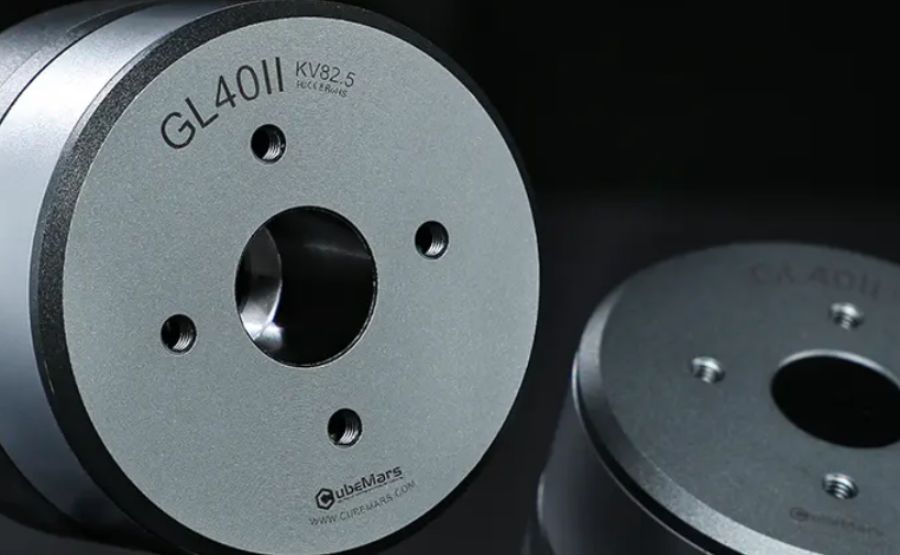
Gimbal Motors for Robot Vision Systems: Keeping Cameras and Sensors Stable During Movement
A robot does not only need to move well. It also needs to see clearly while moving.
For mobile robots, inspection robots, service robots, and autonomous platforms, vision systems are becoming more important. Cameras, depth sensors, thermal sensors, and other perception devices help robots understand their surroundings, avoid obstacles, inspect objects, and make decisions in real time.
But there is one problem: robots are rarely perfectly still. They accelerate, stop, turn, vibrate, climb over uneven surfaces, or adjust their body position. If the camera moves with every small shake, the robot may receive unstable visual data. That can affect navigation, object detection, inspection accuracy, and tracking performance.
This is where gimbal motors become valuable in robotic vision systems.
Why Moving Robots Need Stable Vision Systems
A robot vision system works best when the image is clear, steady, and predictable. If the camera shakes or tilts too much, the robot’s perception system has to work harder.
For example, a mobile inspection robot may need to scan pipes, machines, electrical cabinets, or warehouse shelves. A service robot may need to recognize people or objects while driving through an indoor space. An autonomous platform may use cameras or sensors to detect road edges, obstacles, signs, or worksite conditions.
In all these cases, unstable sensor motion can create problems:
- blurred images
- poor object recognition
- inaccurate tracking
- unstable depth perception
- harder image comparison
- lower inspection data quality
The robot may still move, but it may not “see” well enough to make reliable decisions.
What a Gimbal Motor Does in a Robot Vision Module
A robot vision module often needs to control the angle of a camera or sensor. It may need to look up, look down, rotate toward an object, or stay level while the robot body moves.
A gimbal motor helps provide this controlled movement. Instead of simply spinning at high speed, it is designed for smooth angle adjustment, accurate positioning, and low-vibration motion.
This makes it useful for robotic vision systems where the sensor needs to stay stable while the platform is moving.
| Vision Module Movement | Why It Matters |
| Pitch control | Allows the sensor to look up or down |
| Yaw control | Helps the robot scan left or right |
| Roll correction | Keeps the image level during body tilt |
| Slow tracking | Helps follow people, objects, or inspection targets |
| Fixed-angle holding | Keeps the sensor steady during data capture |
The goal is not just to move the camera. The goal is to move it smoothly enough that the data remains useful.
Why Low Cogging Torque Matters for Robot Cameras
In robot vision, small motion errors can create big problems. A camera does not need rough movement. It needs smooth, controlled motion, especially at low speeds.
Cogging torque refers to the small uneven force that can occur inside some motors. If cogging is too noticeable, the motor may not rotate smoothly. For a robot camera, that can appear as tiny jumps or vibration in the image.
Low cogging torque helps the camera move more naturally. This is especially important when the robot needs to:
- slowly scan an area
- track a moving object
- inspect a surface closely
- hold a zoomed view steady
- align multiple sensors
- collect image data for AI processing
A smooth gimbal motor can improve the quality of visual input, which then helps the robot’s perception system perform better.
How Hollow Shaft Design Helps with Sensor Cable Routing
Robot vision modules often include more than one cable. A camera may need power, video transmission, control signals, feedback lines, or data cables. If the module includes multiple sensors, cable routing becomes even more complex.
Poor cable routing can restrict movement. It can also create drag, increase wear, or make the module harder to assemble and maintain.
A hollow shaft motor design can help by allowing cables to pass through the center area of the motor structure. This keeps wiring cleaner and reduces exposed cable loops around the moving sensor module.
For robots, this is useful because vision modules are often mounted in compact spaces. A cleaner wiring path can make the robot head, sensor pod, or camera module easier to integrate.
Common Uses in Mobile Robots and Autonomous Platforms
Gimbal motors can be used in many robot vision applications where sensor stability and angle control are important.
Mobile Inspection Robots
Inspection robots often move through factories, power plants, warehouses, tunnels, or other structured environments. A stabilized camera can help capture clearer images of equipment, gauges, panels, pipes, or surfaces.
Service Robots
Indoor service robots may need to recognize people, avoid obstacles, or interact with objects. A controlled vision module allows the robot to adjust its camera direction without moving the whole body.
Autonomous Ground Platforms
Autonomous ground robots may use cameras, thermal sensors, or other perception devices for navigation and monitoring. A gimbal motor helps keep these sensors aimed correctly as the platform moves over uneven ground.
Robot Head and Neck Modules
Some robots use camera modules that function like a head. The camera may need to turn toward sound, movement, people, or objects. Smooth motor control makes these movements look more natural and improves visual tracking.
Multi-Sensor Perception Systems
A robot may combine RGB cameras, depth cameras, thermal sensors, or LiDAR-related modules. Stable sensor positioning helps keep data aligned and easier to process.
What Engineers Should Consider When Choosing a Gimbal Motor for Robot Vision
Choosing a gimbal motor for a robot vision system is not only about size. The motor must match the sensor payload, control requirements, and mechanical layout.
Important factors include:
- Smooth low-speed control: important for scanning and tracking
- Low cogging torque: helps reduce tiny image disturbances
- Payload capacity: the motor must support the camera or sensor weight
- Positioning accuracy: useful for repeatable viewing angles
- Weight: lighter modules reduce load on the robot body
- Hollow shaft size: important for cable routing
- Heat behavior: helps maintain stable long-term operation
- Control compatibility: the motor should work with the robot’s control system
A robot vision module is usually part of a larger perception system. The motor should support that system, not create extra vibration, wiring complexity, or control difficulty.
A Practical Example: An Inspection Robot in a Factory
Imagine an inspection robot moving through a factory aisle. It needs to check equipment panels, read gauges, and capture images of machine parts. The floor may not be perfectly smooth, and the robot may stop and turn often.
If the camera is fixed rigidly to the robot body, every movement affects the image. The robot may need to reposition its entire body just to view a target from a better angle.
With a gimbal-controlled vision module, the camera can adjust independently. It can look up at a panel, turn toward a machine, or hold a steady view while the robot moves slowly forward. This makes inspection more flexible and helps the robot capture cleaner visual data.
Final Thoughts: Stable Sensors Help Robots See Better
Robot vision is only as useful as the data it collects. A high-quality camera or sensor will not perform well if the image is constantly shaking, drifting, or misaligned.
Gimbal motors help solve this problem by giving robot vision modules smoother angle control and better sensor stability. For mobile robots, inspection robots, service robots, and autonomous platforms, this can improve image clarity, tracking performance, and perception reliability.
As robots become more dependent on visual data, stable sensor control will become even more important. Better gimbal motion does not just make the camera move smoothly. It helps the robot understand the world more clearly.



Post Comment