The Founder’s Guide to Saying No Without Losing Opportunities
The early stage of building a startup is characterized by an almost universal bias toward yes. Yes to the potential partnership that might lead somewhere. Yes to the feature request from a customer who seems important. Yes to the investor who wants a casual call. Yes to the opportunity to speak at a small conference. Yes to helping the journalist who wants a quote for an article about an adjacent topic.
This bias toward yes makes sense in the very beginning. When you do not know what will work, staying open to everything is a reasonable strategy. The problem is that the bias does not automatically switch off when it stops being useful. For most founders, the transition from saying yes to everything to being deliberate about what gets time and attention is one of the hardest and most consequential shifts in the entire company-building journey.
The Real Cost of Undisciplined Yes
Every yes carries a shadow cost: the no it replaces. When you say yes to a feature request that does not fit your core use case, you are saying no to the focused iteration that might open up value for your best customers. When you say yes to a partnership meeting that has low strategic relevance, you are saying no to the sales call that might have converted. When you say yes to a new market before the first one is working, you are saying no to the depth of focus that might have made the first one work.
In a startup, where time is the resource under the most consistent pressure, misallocated hours compound against you. The founder who spends three hours per week on low-priority commitments loses twelve hours per month and over a hundred hours per year. At the pace of early-stage company building, that is a significant chunk of the time that would have been better spent learning from customers or improving the product.
What Focused Product Building Looks Like
The product is one of the places where the cost of undisciplined yes is most visible. Feature creep is the physical manifestation of too many accommodating decisions. A product that tries to serve too many needs ends up serving none of them particularly well. It becomes hard to explain, hard to sell, and hard to improve because the team is spread across too many directions to go deep on any of them.
The founders who build products that customers genuinely love tend to be relentlessly clear about what the product is for and equally clear about what it is not. That clarity is not a limitation. It is a design choice that makes the product easier to use, easier to explain, and easier to improve over time.
Working with Enter Pro to build your product reinforces this discipline in a practical way. When you are building quickly and iterating based on actual user data, there is natural pressure to stay focused on the things that move the most important metric. Speculative feature development is harder to justify when you are operating at the pace that fast-building tools allow.
How to Say No Well
Saying no well is a skill that requires practice. The most effective version of a strategic no is not a flat refusal. It is a clear explanation of what you are focused on and why, delivered in a way that respects the relationship while being honest about the constraint. This requires knowing your priorities clearly enough to articulate them quickly.
If you cannot explain your reasoning for a no in thirty seconds, the no itself is probably not well-grounded. Either you are saying no to something you should actually consider, or you are saying yes to a priority you have not thought through carefully enough. The clarity of your no reflects the clarity of your strategy.
Applying This to Build Decisions
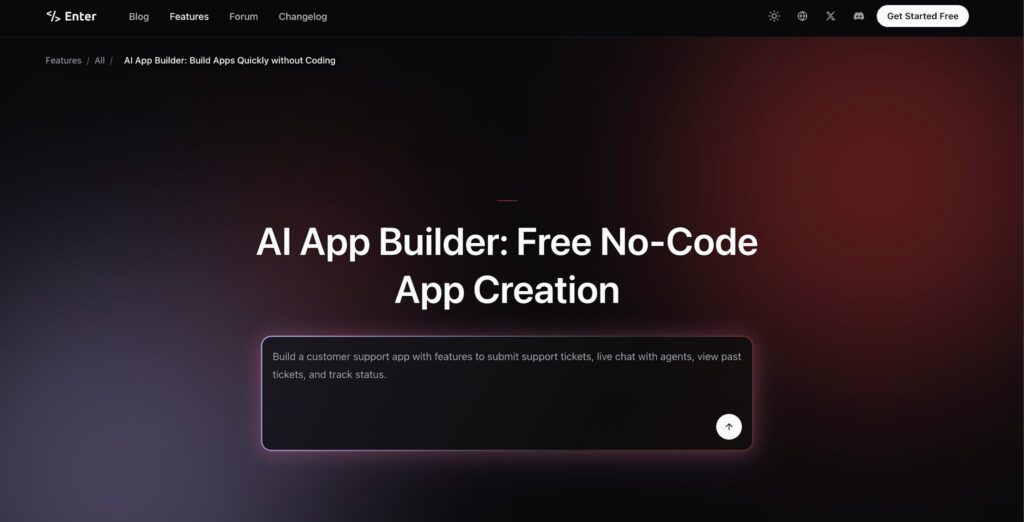
Working with an AI app builder provides a useful forcing function for saying no to low-priority build work. The process of describing what you want to build and walking through the user flow tends to surface whether the feature is actually necessary. If you cannot articulate what problem it solves for which specific user, that is a strong signal that it does not belong in the next build cycle.
Founders who build this habit into their product process find that it catches a surprising amount of low-value work before it consumes time and space in the product. The question is not whether a feature could be useful. The question is whether it is useful enough to deserve the focus it requires, at this moment, for the specific customers you are trying to serve.
The Counterintuitive Payoff
Here is what most founders learn after they develop the discipline to say no consistently: it does not close doors. It opens them. When you are known for being focused, your product does one thing well and your team is clearly aligned on a specific mission, the right customers trust you more because they can see that you understand their specific need. The right investors take you more seriously because focus signals that you have made real choices rather than keeping all options open.
Focus is a signal of conviction. And conviction, backed by evidence and explained clearly, is one of the most valuable things a founder can communicate to any audience. In a landscape full of startups trying to be everything to everyone, genuine focus stands out. It is rare enough to be noticed and credible enough to matter.
Another place where the no discipline shows up as a competitive advantage is in how customers experience the product. Products that have been built with a clear scope tend to be more pleasant to use than ones that have grown in every direction at once. The experience of using something that does one thing really well, without distracting features pulling attention in other directions, is noticeably different from using something that tries to cover every possible need. Customers feel that difference even when they cannot articulate it, and they return to the focused product more often.



Post Comment