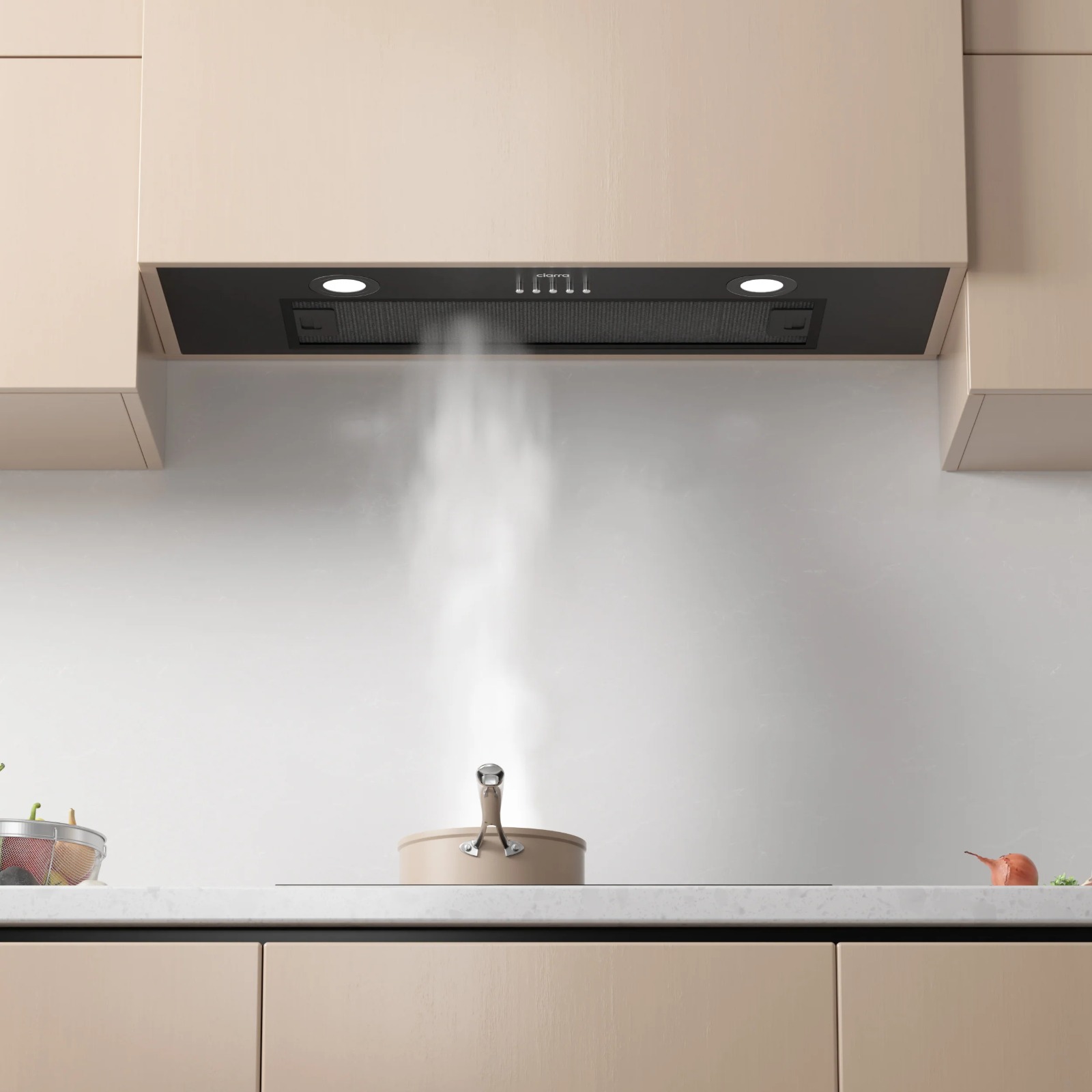
Under Cabinet Range Hoods: The Smart Solution for Space-Efficient Kitchen Ventilation
Not every kitchen has the open wall space or the ceiling height for a dramatic chimney hood. For the majority of kitchen layouts — particularly in apartments, older homes, and compact spaces — an under cabinet range hood is the practical, efficient, and often ideal choice for ventilation.
These space-saving ventilation solutions mount directly beneath an existing upper cabinet, positioning the capture area close to your cooking surface where it works most effectively.
How Under Cabinet Range Hoods Work
Under cabinet range hoods are installed on the underside of a wall cabinet directly above the range or cooktop. Most feature a telescoping or fixed body that slides out during cooking and retracts when not in use.
Depending on the model, they can be ducted (venting air outside) or ductless (recirculating through filters). Ducted is generally more effective; ductless offers more installation flexibility in kitchens where exterior venting isn’t feasible.
Space-Saving Ventilation Solutions: The Core Appeal
In kitchens where counter and wall space is at a premium, space-saving ventilation solutions are invaluable. An under cabinet hood takes up zero counter space and zero wall space — it’s integrated into the existing cabinet structure.
The installation process is typically simpler than wall mount or island hoods, which can mean lower overall cost and less disruption to the kitchen.
Key Buying Criteria
When shopping for an under cabinet range hood, consider:
- Width — should match or exceed your cooktop width
- CFM output — 250–400 CFM is adequate for most gas or electric ranges
- Duct compatibility — check that the hood’s duct outlet matches standard duct sizes available in your market
- Fan speed options — at least three speeds gives useful control
- Lighting quality — bright lighting over the cooktop significantly improves cooking safety and visibility
- Filter type and cleaning ease
Ducted vs. Ductless Under Cabinet Hoods
For the best performance, ducted installation is the clear winner. But when ducting isn’t possible — in apartments, rentals, or kitchens where exterior walls aren’t accessible — a quality ductless under cabinet hood with good charcoal filtration performs admirably for everyday cooking.
The key with ductless is staying on top of filter replacement. A fresh charcoal filter makes all the difference in odor capture effectiveness.
Pairing with the Right Cooking Appliances
Under cabinet hoods work best when your cooking setup is well organized. If you’re using a countertop appliance like the Ciarra Nosh Oven alongside your main range, having a good under-cabinet hood means the air stays clean regardless of which cooking surface you’re using. Together, they make small kitchen spaces much more pleasant and functional.
Installation Basics
Most under cabinet hoods come with all required mounting hardware and clear instructions. The critical step is ensuring the hood is level and securely attached to the cabinet — vibration from a loose mount can increase noise significantly.
If ducting, cut the duct opening carefully, use appropriate duct connectors, and seal all joints thoroughly.
Final Thoughts
An under cabinet range hood is the unsung hero of kitchen ventilation — quietly effective, space-efficient, and straightforward to install. For most residential kitchens, it provides exactly the performance you need without demanding the space of larger alternatives.
Choose wisely based on your cooktop width and cooking habits, and this modest appliance will improve your daily kitchen experience dramatically.




Post Comment