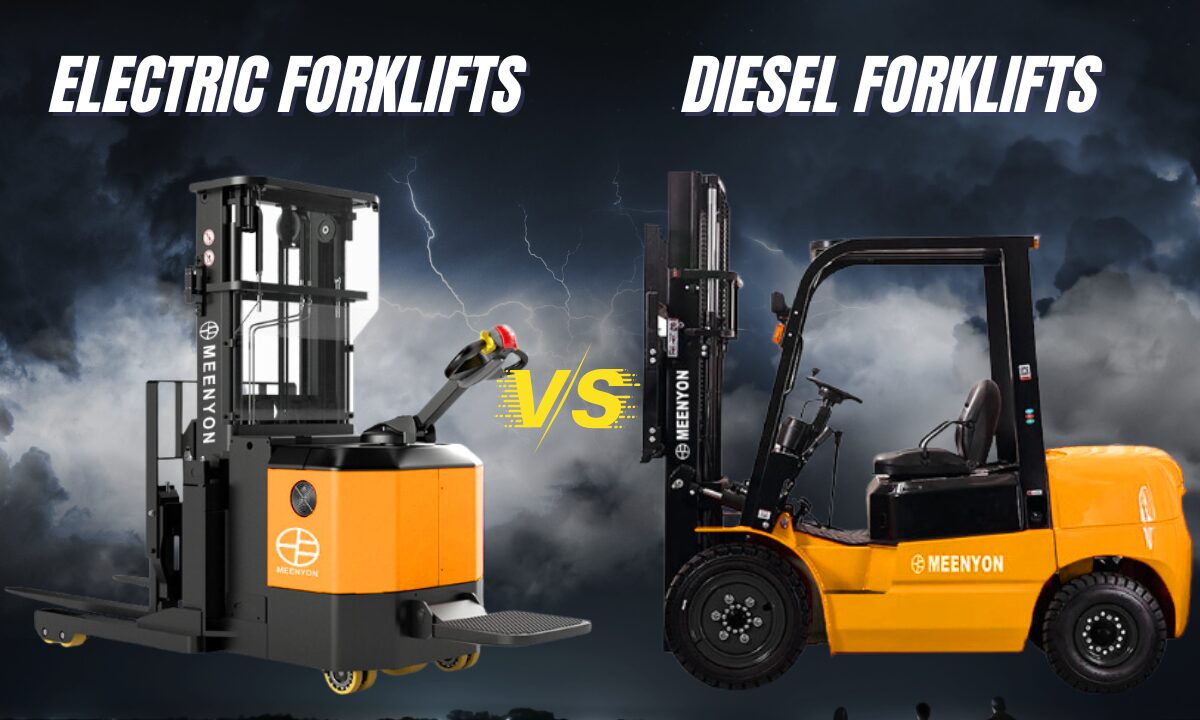
What to consider before switching from diesel to electric forklifts
The case for electric forklifts in Australian warehousing and distribution has strengthened considerably in recent years. Advances in battery technology, particularly the wider availability of lithium-ion options, have addressed many of the productivity concerns that previously made diesel the default choice for heavier applications. For operations managers considering a transition, the question has shifted from whether electric can match diesel performance to whether the specific operation is set up to make the switch successfully.
Getting the answer right depends less on the machines themselves and more on four factors: total cost of ownership, charging infrastructure, application fit, and transition approach.
Total cost of ownership
Diesel forklifts typically carry a lower purchase price than equivalent electric forklifts. The comparison shifts over the operating life of the machine when running costs are included. Electric units have lower fuel costs, fewer moving components requiring service, and generally lower planned maintenance expense over the machine’s life.
The crossover point, where the lower running cost of electric offsets the higher upfront cost, depends on utilisation intensity, fuel prices, and the cost of the charging infrastructure investment. For high-utilisation operations, the crossover typically arrives within a manageable period. For low-utilisation applications, the economics are less clear and warrant a more detailed analysis before committing to the transition.
Charging infrastructure: the planning requirement
The infrastructure requirement for electric forklifts is the most common under-estimated element of a diesel-to-electric transition. An operation that simply parks electric units where diesel ones used to sit, without planning the charging infrastructure, quickly discovers that equipment is unavailable when needed.
Infrastructure planning should address:
- Power supply capacity. Charging a fleet of electric forklifts simultaneously places a meaningful load on the site’s electrical supply. A licensed electrician needs to confirm that the existing supply can support the charging load, or a supply upgrade needs to be factored into the transition cost.
- Charging bay location. Chargers should be positioned so that units can be charged during natural operational breaks, particularly shift changeovers and overnight. Poorly positioned charging infrastructure creates operational friction that reduces the effectiveness of the transition.
- Battery technology choice. Lead-acid batteries require full charge cycles and dedicated charging windows. Lithium-ion batteries tolerate opportunity charging, which is more compatible with busy multi-shift operations and removes many of the scheduling constraints of lead-acid.
Shift patterns and productivity parity
For most standard warehouse applications, modern electric forklifts match diesel on productivity. The concern is continuous-duty, heavy-cycle operations that run machines hard across extended shifts.
In these applications, single-shift operations with overnight charging present no particular challenge. Multi-shift operations need either battery swap capability, lithium-ion units with sufficient capacity for the shift, or a charging window built into the shift pattern. Each is a workable solution, but each needs to be planned rather than assumed.
Where diesel retains a genuine advantage is in outdoor heavy-duty applications, particularly where the operation involves sustained heavy lifting, rough terrain, or sites where charging infrastructure is impractical to install.
Application fit: where electric has a clear edge
Several application contexts favour electric forklifts clearly over diesel:
- Indoor air quality. Diesel exhaust in enclosed warehouses, cool rooms, and food production environments creates both a health risk and a compliance issue. Electric units produce no exhaust at the point of operation.
- Noise. Electric units operate significantly more quietly than diesel. In operations adjacent to office areas, customer facilities, or residential zones, this is a real operational and community consideration.
- Food and pharmaceutical handling. Where product contamination risk is managed, the absence of exhaust and the lower fluid contamination risk of electric units supports compliance with food safety and pharmaceutical handling standards.
A staged transition rather than a fleet replacement
For most operations, a complete overnight fleet replacement from diesel to electric introduces more risk than a staged approach. A staged transition typically begins with the highest-utilisation units in the clearest application fit, assesses the infrastructure and operational results, and then extends the programme.
Toyota Material Handling Australia works with operations across this transition, from the initial application assessment through to fleet electrification programmes. For a review of how the switch might work for your specific operation and application mix, speak to the TMHA team.




Post Comment