Can LASIK Permanently Remove the Need for Glasses
For many people, glasses and contact lenses are part of daily life. While they effectively correct vision, they may also cause inconvenience during sports, travel, work, or everyday activities. Because of this, many individuals explore LASIK as a long-term vision correction option and reduce dependence on corrective eyewear.
However, one of the most common questions people ask is whether ‘LASIK can permanently eliminate the need for glasses?’ The answer is yes, LASIK can permanently reduce or eliminate the need for glasses in many people by reshaping the cornea to correct refractive errors. However, some individuals may still require glasses later in life for reading, age-related vision changes, or minor residual power.
Understanding how LASIK works, who qualifies, and what results to expect can help individuals make informed decisions about vision correction.
What Is LASIK Eye Surgery?
LASIK stands for Laser-Assisted In Situ Keratomileusis. It is a laser vision correction procedure used to treat common refractive errors by reshaping the cornea.
The cornea is the clear front surface of the eye that helps focus light onto the retina. When the cornea is not shaped properly, vision may become blurry.
LASIK changes the shape of the cornea so light focuses more accurately, improving vision.
Vision Problems LASIK Can Treat
LASIK is commonly used to correct:
- Myopia (nearsightedness)
- Hyperopia (farsightedness)
- Astigmatism
These conditions commonly cause blurred vision and dependence on glasses or contact lenses.
How Does LASIK Work?
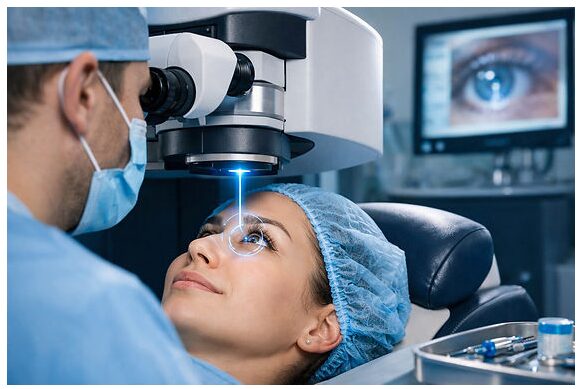
LASIK uses advanced laser technology to reshape the corneal tissue with high precision.
Steps Involved in the Procedure
The procedure usually includes:
- Creating a thin flap on the cornea
- Reshaping the underlying corneal tissue with a laser
- Repositioning the flap for natural healing
The surgery usually takes only a few minutes per eye, and most patients notice visual improvement soon after the procedure.
Can LASIK Permanently Correct Vision?
LASIK permanently reshapes the cornea, which means the structural correction made during surgery does not reverse.
What “Permanent” Means in LASIK
The changes made to the cornea are permanent. However, this does not guarantee that vision will remain unchanged for life.
Natural aging and other eye-related changes may still affect vision over time.
Why Vision May Change Later
Even after successful LASIK, vision may change due to:
- Aging-related changes in the lens
- Development of presbyopia
- Cataracts
- Hormonal changes
- Certain health conditions
LASIK corrects the existing refractive error but does not prevent future age-related vision changes.
How Effective Is LASIK?
LASIK has a high success rate in reducing dependence on glasses and contact lenses.
Common Outcomes
Many patients experience:
- Improved distance vision
- Reduced need for glasses
- Better convenience during daily activities
- Enhanced visual clarity
A large number of individuals achieve 20/20 vision or close to it, depending on their eye condition before surgery.
Who Is a Good Candidate for LASIK?
Not everyone is suitable for LASIK. A detailed eye examination is necessary before considering surgery.
Ideal Candidates Usually Have
- Stable vision for at least one year
- Healthy corneas
- No serious eye disease
- Realistic expectations
- Age above 18 years
Suitability depends on several factors, including eye health and medical history.
Who May Not Be Eligible?
Certain individuals may not be ideal candidates.
Conditions That May Affect Eligibility
- Thin corneas
- Severe dry eyes
- Advanced glaucoma
- Uncontrolled diabetes
- Corneal disorders
Alternative vision correction procedures may be recommended in such cases.
In Mumbai, many individuals exploring long-term vision correction options commonly consider undergoing LASIK treatment in Mumbai after a detailed eye evaluation to determine eligibility and expected visual outcomes.
Benefits of LASIK Beyond Glasses Removal
LASIK offers several lifestyle benefits beyond reducing the need for glasses.
Common Benefits Include
- Improved convenience in sports and fitness
- Better vision during travel
- No need for daily contact lens maintenance
- Greater confidence in social situations
- More comfort during outdoor activities
For many people, these lifestyle improvements are a major reason for choosing LASIK.
Does Everyone Stop Wearing Glasses After LASIK?
Not always. While many people significantly reduce or eliminate their need for glasses, some individuals may still need them in certain situations.
Situations Where Glasses May Still Be Needed
Some people may need glasses for:
- Reading later in life
- Night driving
- Minor residual refractive errors
This depends on age, eye condition, and long-term vision changes.
Possible Side Effects and Risks
Like any medical procedure, LASIK has potential side effects.
Common Temporary Side Effects
Patients may experience:
- Dry eyes
- Light sensitivity
- Halos around lights
- Mild discomfort
- Temporary blurred vision
Most side effects improve during the healing process.
Rare Complications
Although uncommon, complications may include:
- Under-correction or over-correction
- Flap-related issues
- Persistent dryness
Choosing an experienced eye specialist helps reduce risks.
Recovery After LASIK
Recovery is usually quick compared to many surgical procedures.
What to Expect After Surgery
Most patients notice:
- Improved vision within 24 to 48 hours
- Mild irritation during early healing
- Gradual stabilization over several weeks
Following post-procedure instructions supports better healing.
Recovery Tips
Patients are usually advised to:
- Avoid rubbing the eyes
- Use prescribed eye drops
- Avoid swimming for a short period
- Attend follow-up appointments
Proper care helps protect long-term results.
Long-Term Eye Care After LASIK
Even after LASIK, regular eye checkups remain important.
Why Ongoing Eye Care Matters
Regular exams help:
- Monitor vision changes
- Detect age-related eye conditions
- Maintain overall eye health
LASIK improves refractive vision but does not prevent other eye diseases.
Frequently Asked Questions
Does LASIK permanently remove the need for glasses?
LASIK permanently reshapes the cornea, but some people may still need glasses later due to aging-related vision changes.
How long do LASIK results last?
For many individuals, LASIK results remain stable for years, though natural changes in vision may occur with age.
Is LASIK painful?
LASIK is generally not painful. Numbing eye drops are used, and most patients experience only mild discomfort.
Can LASIK be repeated?
In some cases, enhancement procedures may be possible if vision changes or correction is incomplete.
At what age is LASIK best?
LASIK is usually considered after age 18 when vision has stabilized.
Conclusion
LASIK is an effective and long-lasting solution for correcting common vision problems and reducing dependence on glasses or contact lenses. The procedure permanently reshapes the cornea, offering clearer vision for many individuals.
However, while LASIK can significantly reduce the need for glasses, it does not stop natural aging changes in the eyes. Understanding the benefits, limitations, and long-term expectations helps individuals make informed decisions about vision correction.
A thorough eye evaluation and regular follow-up care remain essential for achieving the best possible outcomes and maintaining long-term eye health.




Post Comment